How Infant Formula Is Made: A Complete Guide to the Manufacturing Process
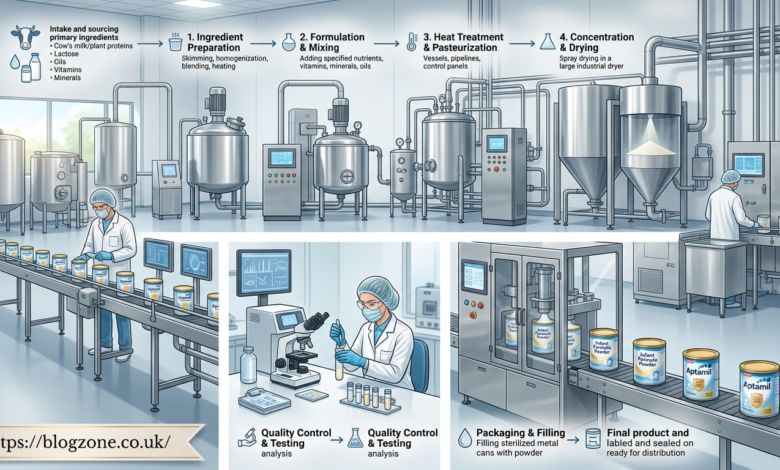
Infant formula is a specially developed nutritional product designed to provide essential nutrients to babies when breastfeeding is not possible or when additional feeding support is needed. Many parents wonder how infant formula is made, what ingredients it contains, and how manufacturers ensure that each product meets strict nutritional and safety standards. The process involves carefully selected ingredients, scientific formulation, advanced food-processing technology, and extensive quality testing.
Unlike ordinary powdered milk, infant formula is designed to meet the nutritional needs of babies during a critical stage of growth and development. Manufacturers must carefully balance proteins, fats, carbohydrates, vitamins, and minerals to create a product suitable for its intended age group. Every stage, from ingredient selection to packaging, plays an important role in producing a safe and consistent product.
This article explains the complete infant formula manufacturing process, the ingredients commonly used, the differences between formula types, and the safety measures involved in production.
What Is Infant Formula?
Infant formula is a commercially manufactured food designed to provide nutrition for infants. Most standard formulas are based on cow’s milk proteins that have been adjusted to make the nutritional composition more appropriate for babies. Other formulas use soy protein, extensively hydrolyzed proteins, or specialized ingredients for particular medical or nutritional needs.
Infant formula is available in several forms, including powdered formula, liquid concentrate, and ready-to-feed liquid formula. Powdered products are popular because they are lightweight, convenient to transport, and have a relatively long shelf life when stored correctly. Ready-to-feed products require no mixing with water before use, although they must still be handled according to the label instructions.
Manufacturers develop formulas according to nutritional regulations and scientific research. These products are not simply ordinary milk with added vitamins. Their composition is carefully controlled to provide appropriate nutrition for a baby’s age and developmental needs.
Main Ingredients Used in Infant Formula


8
The ingredients used in infant formula vary according to the product’s formulation, but most standard formulas contain several major nutritional components.
Proteins
Protein supports tissue development, growth, and other essential bodily functions. Cow’s milk-based formulas commonly use milk proteins, such as whey and casein, in carefully controlled proportions. Some products modify the protein structure or use partially or extensively hydrolyzed proteins to meet specific formulation requirements.
Carbohydrates
Lactose, the naturally occurring carbohydrate in milk, is commonly used in standard cow’s milk-based formulas. It provides energy and contributes to the overall nutritional composition. Depending on the product, other permitted carbohydrates may also be used.
Fats and oils
Fat supplies concentrated energy and helps deliver essential fatty acids. Manufacturers may use carefully selected vegetable oils, milk fat, or other approved fat sources. The specific blend is designed to achieve an appropriate fatty acid profile.
Vitamins and minerals
Infant formula contains essential vitamins and minerals, including iron, calcium, vitamin D, and other nutrients required for normal growth. The quantities are precisely measured because both insufficient and excessive amounts can be harmful.
Additional nutritional ingredients
Some formulas contain ingredients such as choline, taurine, or specific prebiotics, depending on local regulations and the product’s design. The inclusion of any ingredient must be supported by appropriate safety and nutritional considerations.
Step One: Selecting and Testing Raw Materials
The manufacturing process begins with the selection of approved suppliers and the inspection of raw materials. Ingredient quality is essential because the final product must meet strict nutritional and microbiological standards.
Manufacturers evaluate milk ingredients, oils, carbohydrates, vitamins, minerals, and other components before they enter production. Testing may include checks for identity, purity, moisture, nutritional composition, contamination, and relevant chemical residues.
Milk-based ingredients must meet applicable food-safety requirements. Suppliers are expected to follow appropriate hygiene and quality-control procedures, while manufacturers verify that incoming materials meet their specifications.
Ingredients that fail required checks are rejected or held for further investigation. This initial screening helps prevent unsuitable materials from entering the production system.
Traceability is another important part of this stage. Manufacturers maintain records identifying ingredient batches, suppliers, and inspection results. These records help investigators identify the source of a problem if a safety or quality issue emerges later.
Step Two: Preparing the Nutritional Formula
After raw materials pass inspection, food scientists and production specialists prepare the formula according to a carefully defined recipe. Each ingredient has a specific purpose, and its quantity must remain within established specifications.
Manufacturers use computerized weighing systems and calibrated equipment to measure the ingredients accurately. Protein sources, carbohydrates, fats, vitamins, minerals, and other approved components are combined according to the product’s nutritional design.
Some ingredients are first dissolved or dispersed in water to create a liquid mixture. Fat ingredients may require specialized mixing to distribute them evenly throughout the product. Certain vitamins and minerals are added at carefully controlled stages to help maintain the intended nutrient content.
The formulation is not based on guesswork. Manufacturers establish specifications for nutrient levels, ingredient quality, and processing conditions. These controls help ensure that different production batches have a consistent nutritional composition. The U.S. Food and Drug Administration (FDA), for example, establishes specific nutrient and quality requirements for infant formula sold in the United States.
Step Three: Mixing and Homogenization
Once the ingredients have been measured, they are mixed in industrial processing equipment. The goal is to create a uniform mixture in which the nutritional components are distributed consistently.
For liquid formula, manufacturers may use high-speed mixers and homogenizers. Homogenization reduces the size of fat droplets, helping distribute fat more evenly throughout the liquid. This is important because uneven distribution could affect the consistency and nutritional uniformity of the final product.
The mixture may also undergo filtration or other processing steps to remove unwanted physical particles, depending on the manufacturing design. Equipment settings, temperature, mixing time, and ingredient addition sequences are carefully monitored.
Manufacturers use in-process testing to identify deviations before the product advances to later stages. If a mixture does not meet the required specifications, it may be held for investigation rather than automatically progressing through production.
Step Four: Heat Treatment and Microbial Control
Food safety is one of the most important aspects of infant formula manufacturing. Babies have developing immune systems, making protection against harmful microorganisms particularly important.
Depending on the formula type and manufacturing process, liquid ingredients may undergo controlled heat treatment or other validated microbial-control procedures. These treatments are designed to reduce harmful microorganisms while maintaining the product’s required nutritional and quality characteristics.
However, powdered infant formula is not sterile. Even when it is manufactured under strict hygienic conditions, harmful bacteria can occasionally survive or enter the product during processing. Cronobacter is one organism of particular concern because it can cause serious infections in infants.
Manufacturers therefore use preventive controls, sanitation procedures, environmental monitoring, and appropriate testing. Facilities also manage risks associated with equipment, water, air, packaging materials, and employee hygiene.
Liquid ready-to-feed formula generally undergoes a different processing and packaging approach from powdered formula. Commercially sterile liquid products can be sealed in suitable containers, whereas powdered products require additional attention to contamination risks during drying, handling, and packaging.
7. Step Five: Drying the Formula into Powder


9
For many powdered infant formulas, spray drying is a key manufacturing stage. After the liquid mixture has been prepared and processed as required, it is converted into a fine powder using specialized drying equipment.
In spray drying, the liquid mixture is dispersed into tiny droplets inside a drying chamber. Controlled hot air removes much of the moisture from these droplets, leaving small particles of concentrated powder. The powder is then collected using appropriate industrial separation systems.
Manufacturers carefully control drying conditions because excessive heat or unsuitable processing conditions can affect the product’s physical characteristics and nutritional quality.
Some production systems also use additional drying stages to achieve the required moisture level. Other ingredients may be incorporated later through a controlled blending process, depending on the formula and manufacturing design.
The finished powder must meet specifications for moisture, texture, solubility, and other physical properties. Managing moisture is particularly important because excess moisture can affect storage stability and product quality.
It is worth noting that not every infant formula follows this exact process. Some liquid products are manufactured and packaged without being converted into powder.
Step Six: Adding Sensitive Ingredients and Final Blending
Depending on the manufacturing method, certain heat-sensitive nutrients or other ingredients may be added after the main drying stage. These components are blended into the powder using controlled equipment designed to distribute them evenly.
Final blending is an important step because the product must contain the intended proportions of nutrients throughout the batch. Manufacturers verify that the blending process achieves the required uniformity.
The production environment must also be managed carefully to reduce the risk of contamination. Dry ingredients can introduce microorganisms, so the use of clean equipment, controlled handling procedures, and appropriate environmental safeguards is essential.
Manufacturers establish detailed procedures for ingredient addition, equipment cleaning, batch identification, and production records. These measures help ensure that the finished product matches its approved formulation and established quality standards.
Step Seven: Quality Testing and Inspection
Before infant formula is released for sale, manufacturers conduct quality-control checks to confirm that it meets the relevant specifications.
Testing may include:
- Nutritional analysis: Verifies that important nutrients are present at the intended levels.
- Microbiological testing: Evaluates potential contamination risks.
- Moisture testing: Checks whether powdered formula meets its moisture specifications.
- Physical testing: Examines appearance, texture, mixing characteristics, and other relevant properties.
- Packaging inspection: Checks seals, container integrity, labeling, and batch identification.
- Documentation review: Confirms that production and testing records meet established requirements.
Quality control does not rely on one final laboratory test alone. It covers ingredient acceptance, production conditions, equipment hygiene, processing controls, finished-product testing, and recordkeeping.
If a batch fails a required specification, it should be held while the manufacturer investigates the problem and determines the appropriate disposition. It must not be released simply because its appearance seems normal.
Regulatory requirements differ between countries. In the United States, FDA regulations address infant formula manufacturing practices, nutrient specifications, quality-control procedures, records, and recall requirements.
Step Eight: Packaging and Distribution
After the powder passes the required checks, it is transferred into suitable packaging under controlled conditions. Common packaging options include metal cans, sealed tubs, and other approved containers designed to protect the product from moisture and environmental contamination.
Manufacturers select packaging materials based on product stability, storage conditions, and regulatory requirements. The packaging line measures the required quantity, fills containers, seals them, and applies labels with information such as the product name, intended age group, ingredients, preparation instructions, batch code, and expiry or best-before information, as applicable.
Each production batch must be traceable through manufacturing and distribution records. If a problem is identified after the product reaches the market, these records help manufacturers determine which batches may be affected and support appropriate recall action.
The finished products are then stored and transported under suitable conditions. Retailers and consumers must also follow the manufacturer’s storage instructions to maintain product quality.
Different Types of Infant Formula
There are three common physical forms of infant formula, each with a different manufacturing and preparation approach.
| Formula type | How it is produced | Preparation |
|---|---|---|
| Powdered formula | Ingredients are processed and dried into powder | Requires water and careful preparation |
| Liquid concentrate | Produced as a concentrated liquid and sealed in suitable packaging | Requires the amount of water specified on the label |
| Ready-to-feed formula | Manufactured as a prepared liquid in sealed packaging | Does not require added water |
Although these products have different processing requirements, each must meet the applicable safety and nutritional standards for its intended use. Ready-to-feed formula should never be diluted unless the manufacturer’s instructions specifically require it, and powdered formula must always be prepared according to its label.
Is Infant Formula Manufacturing Safe?
Commercial infant formula manufacturing uses scientific formulation, controlled production environments, quality testing, and regulatory oversight to reduce risks. Nevertheless, no manufacturing system should be treated as completely risk-free.
Powdered infant formula deserves particular care because it is not sterile. Parents and caregivers should purchase products from reliable sources, check the packaging for damage, follow storage instructions, and use safe preparation practices.
Do not make homemade infant formula as a substitute for a commercially manufactured product. Homemade recipes may not provide the correct balance of nutrients and can expose babies to serious nutritional or contamination risks.
For parents who have questions about a baby’s feeding needs, a pediatrician or qualified healthcare professional can help select an appropriate product. Specialized formulas may be necessary for certain medical conditions and should be chosen with professional guidance.
Frequently Asked Questions (FAQs)
1. What is infant formula made from?
Most standard infant formulas contain a carefully balanced combination of protein, carbohydrates, fats, vitamins, minerals, and other permitted nutritional ingredients. The exact ingredients depend on the product.
2. Is powdered infant formula sterile?
No. Powdered infant formula is not sterile and may occasionally contain harmful microorganisms. Proper preparation, hygiene, and storage are essential.
3. How does milk become infant formula powder?
Manufacturers combine selected nutritional ingredients into a liquid mixture, process it under controlled conditions, and commonly use spray drying to remove moisture and produce powder. The powder is then blended when necessary, tested, and packaged.
4. Are all infant formulas manufactured in the same way?
No. Manufacturing methods differ according to the formula’s ingredients, physical form, nutritional purpose, and applicable regulatory requirements.
5. Can parents make infant formula at home?
Homemade infant formula is not recommended because it may lack essential nutrients or contain dangerous ingredient concentrations or contaminants. Commercial infant formula should be prepared according to its label and professional healthcare advice.
Conclusion
Understanding how infant formula is made reveals the science and care involved in producing a food designed for babies’ nutritional needs. The process typically includes ingredient selection, precise formulation, mixing, appropriate microbial controls, drying when necessary, final blending, laboratory testing, packaging, and distribution.
Every stage contributes to product consistency and safety. Manufacturers must manage nutritional accuracy, contamination risks, processing conditions, and traceability while complying with the regulations applicable to their markets.
For parents, the most important takeaway is that infant formula is a carefully formulated nutritional product, not simply powdered milk. Choosing a suitable commercial product, following its preparation instructions, and seeking professional advice when needed can help support safe infant feeding.


