How Tilly Lockey Became a Bionic Arms Pioneer and Inspiration
Tilly Lockey’s Early Life and Life-Changing Illness
Tilly Lockey was born in 2005 in County Durham, England, and became widely known after a serious illness during childhood led to the loss of both her hands. She developed meningococcal septicaemia when she was nine years old, a life-threatening infection that caused extensive damage to her body and resulted in amputations. Rather than allowing the experience to define her limitations, Lockey adapted to a new way of living and became interested in advanced prosthetic technology. Her early experiences shaped her determination to explore what modern prosthetics could offer and eventually helped place her at the center of conversations about bionic limbs, disability, technology, and independence.
How Bionic Arms Changed Her Independence
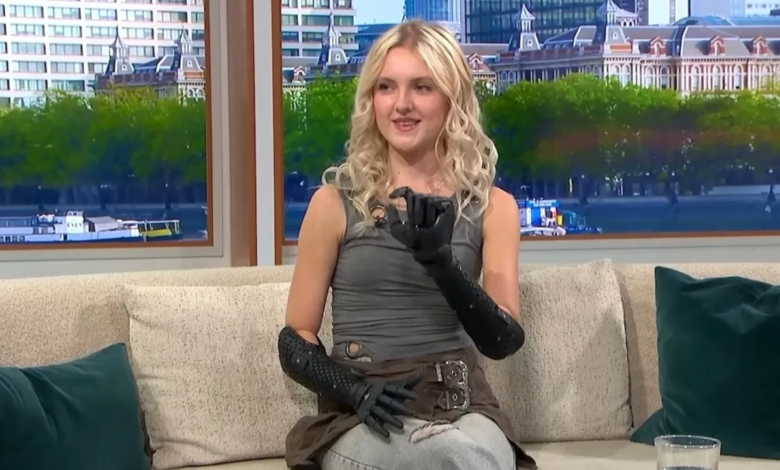
Tilly Lockey’s experience with bionic arms transformed the way she approached everyday activities and personal independence. Traditional prosthetics can provide important support, but advanced myoelectric and bionic devices gave her greater control and a wider range of movement. Her bionic arms allowed her to perform practical tasks while also giving her the freedom to express her personality through different designs. This technology became more than a medical aid for Lockey; it became a tool that helped her adapt to daily life while challenging assumptions about what people with limb differences can do.
Her work with advanced prosthetic technology also highlighted the importance of making prosthetic devices more functional, comfortable, and visually appealing. Lockey has openly discussed how technology can influence confidence and independence, particularly for younger people adjusting to limb loss. By using and publicly demonstrating bionic arms, she helped show audiences that prosthetics can combine practical abilities with modern design. Her experience illustrates how developments in engineering can give users greater choice and help them feel more comfortable presenting their identity in their own way.
Becoming Part of the Prosthetics Revolution
Tilly Lockey became an important young voice in the growing prosthetics revolution by embracing advanced technology and publicly sharing her experiences with bionic limbs. Her involvement went beyond simply using prosthetic devices, as she became interested in how engineering, design, and creativity could make them more useful and appealing. Through public appearances, interviews, demonstrations, and collaborations, she helped bring attention to the possibilities of modern prosthetics. Her journey also showed how people with limb differences can participate in conversations about the future of assistive technology rather than being viewed only as recipients of medical treatment.
Tilly Lockey and the Development of the Hero Arm
Tilly Lockey became closely associated with the Hero Arm, an advanced bionic prosthesis developed by Open Bionics. The device uses muscle signals to control different hand movements, giving users a more intuitive way to interact with their surroundings. Lockey worked with the company as a prominent user and ambassador, helping demonstrate how a prosthetic could combine practical functionality with a distinctive, modern appearance. Her involvement helped bring public attention to the idea that prosthetic limbs could be designed around both individual needs and personal identity.
The Hero Arm also represented a shift in how advanced prosthetics could be presented to younger users. Its lightweight design, interchangeable covers, and futuristic appearance challenged the traditional image of prosthetic limbs as purely clinical devices. Lockey’s visibility helped illustrate how technology and design can work together to create prostheses that are functional while also allowing users to express themselves. Her connection with the Hero Arm became an important part of her public work and contributed to wider interest in accessible bionic technology.
From Bionic Technology to Modelling and Media
Tilly Lockey has expanded her work beyond prosthetic technology into modelling, public speaking, television, and media appearances. Her distinctive use of bionic arms has made her a recognizable figure in discussions about disability, fashion, technology, and representation. Through modelling and creative projects, she has challenged conventional ideas about beauty and shown that visible differences can be presented confidently rather than hidden. Her media presence has also allowed her to discuss her experiences with limb loss and bionic technology with broader audiences, helping connect technological innovation with real-life experiences of independence, identity, and self-expression.
Why Her Story Has Inspired a Wider Audience
Tilly Lockey’s story has attracted attention because it combines personal resilience with rapid developments in modern technology. Her experience of losing both hands as a child could have remained a private medical challenge, but she chose to speak publicly about adapting to life with prosthetic limbs and using advanced bionic technology. Her willingness to demonstrate what her prostheses can do has helped audiences see disability from a different perspective, focusing on ability, creativity, and independence rather than limitations alone.
Her journey has also appealed to people interested in science, engineering, fashion, and popular culture. By appearing in media projects and discussing her experiences, Lockey has helped make conversations about prosthetics more accessible to people who may have had little previous exposure to the subject. Her story shows how technology can become part of a person’s everyday identity while also encouraging wider discussion about accessibility, representation, and the future possibilities of assistive devices.
Tilly Lockey’s Influence on Disability Representation
Tilly Lockey has contributed to disability representation by presenting herself as a confident young woman whose identity is not defined solely by limb loss. Through modelling, media appearances, public speaking, and her work with bionic technology, she has challenged stereotypes about what disability looks like and how disabled people are expected to appear in public. Her visibility has helped promote a more modern understanding of prosthetics, showing them as tools that can support independence while also becoming part of personal style and self-expression. By sharing her experiences openly, Lockey has encouraged greater awareness of limb differences and the importance of representing disabled people in diverse and positive ways.
What Her Journey Says About the Future of Prosthetics
Tilly Lockey’s journey demonstrates how quickly prosthetic technology can develop when engineering, design, and the experiences of users are brought together. Modern bionic limbs are increasingly designed to respond to muscle signals and provide more natural control, while improvements in materials and electronics can make devices lighter and more adaptable. Her experience also highlights the importance of designing prosthetics around the individual, because comfort, usability, appearance, and confidence can all influence how successfully someone incorporates a device into everyday life.
Her public work suggests that the future of prosthetics should involve more than simply replacing lost physical functions. Advances in robotics, sensors, artificial intelligence, and human-machine interfaces could eventually provide users with increasingly precise control and greater interaction with their environment. At the same time, affordability and accessibility will remain important challenges, because advanced prosthetic technology is only truly transformative when people who need it can obtain and use it. Lockey’s story therefore represents both the progress already made and the potential for further innovation.
Conclusion and FAQs
Tilly Lockey’s journey from childhood illness and limb loss to becoming a prominent advocate for bionic technology shows how personal experience, innovation, and public representation can come together to challenge traditional ideas about disability. Her work with advanced prosthetics, modelling, and media has helped draw attention to the possibilities of modern technology while emphasizing independence, confidence, and individual identity. Her story also highlights the importance of continuing to improve prosthetic devices so they become more functional, accessible, comfortable, and expressive for the people who rely on them.