Population of the Dallas Fort Worth Metroplex: Growth, Demographics, and Future Trends
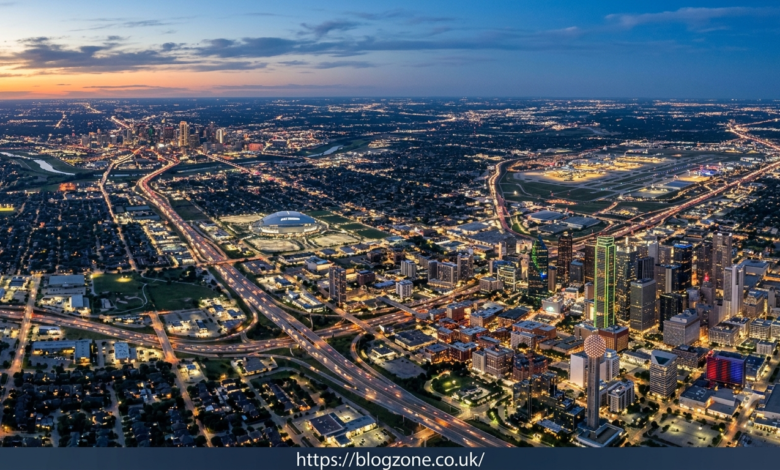
The population of the Dallas Fort Worth Metroplex has grown significantly over the past decade, making North Texas one of the most important population and economic centers in the United States. The region attracts families, professionals, students, entrepreneurs, and businesses because of its employment opportunities, expanding suburbs, diverse communities, and relatively broad range of housing options.
According to the U.S. Census Bureau’s population estimates, the Dallas–Fort Worth–Arlington metropolitan area had approximately 8.48 million residents in 2025, up from about 8.35 million in 2024. This makes it one of the largest metropolitan areas in the country.
+1 Its growth reflects a combination of domestic migration, international immigration, natural population increases, and the continued expansion of communities throughout North Texas.
Understanding the region’s population requires looking beyond Dallas and Fort Worth themselves. The Metroplex includes numerous cities and suburban communities, each contributing to the area’s economic development, housing demand, transportation needs, and cultural identity.
What Is the Dallas Fort Worth Metroplex?
The Dallas Fort Worth Metroplex, often called DFW, is a large metropolitan region in North Texas centered on the cities of Dallas and Fort Worth. It includes Arlington and many surrounding cities, towns, and suburban communities connected through employment, transportation, education, and commerce.
The official statistical name for the principal metropolitan area is the Dallas–Fort Worth–Arlington Metropolitan Statistical Area. Its boundaries cover a much larger area than the two central cities, which is important when discussing the total population.
Communities such as Plano, Irving, Frisco, McKinney, Denton, Grand Prairie, and Arlington contribute to the region’s overall population. Each has its own residential neighborhoods, commercial centers, schools, and employment opportunities.
The Metroplex is also a major transportation hub, supported by Dallas Fort Worth International Airport, major interstate highways, and regional rail and road networks. These connections help residents travel for work and allow companies to operate across a broad geographic area.
Because the region contains both densely developed urban centers and rapidly expanding suburban communities, population statistics can vary depending on the geographic definition being used. The population of Dallas city, Fort Worth city, and the entire DFW metropolitan area should therefore be treated as three different measurements.
2. Current Population of the Dallas Fort Worth Metroplex
The latest available annual estimate for the Dallas–Fort Worth–Arlington metropolitan statistical area puts its population at 8,477,157 in 2025. The estimate is based on July 1 population figures published by the U.S. Census Bureau and reproduced by the Federal Reserve Bank of St. Louis.
The following table shows how the metropolitan area’s population has changed in recent years.
| Year | Estimated population |
|---|---|
| 2020 | 7.67 million |
| 2021 | 7.78 million |
| 2022 | 7.97 million |
| 2023 | 8.16 million |
| 2024 | 8.35 million |
| 2025 | 8.48 million |
Source: U.S. Census Bureau annual estimates, available through FRED. Figures are rounded.
These figures demonstrate that the region has continued to expand. Between 2020 and 2025, its population increased by approximately 810,000 people. This growth has created opportunities for businesses, developers, educational institutions, and local governments, while increasing the need for housing, transportation, utilities, and public services.
The metropolitan area also represents a substantial share of the Texas population. Its economic influence extends beyond North Texas because businesses based in DFW serve customers throughout the country and internationally.
3. Population Growth Over the Years
The population of the Dallas Fort Worth Metroplex has increased steadily over several decades. In 2000, the metropolitan area had approximately 5.20 million residents. By 2010, the figure had reached roughly 6.39 million, and by 2020 it was approximately 7.67 million. In 2025, it exceeded 8.47 million.
This long-term expansion reflects the region’s transformation from a major regional business center into a large, interconnected metropolitan economy. As companies established offices and facilities across North Texas, workers moved into both established neighborhoods and developing suburbs.
The rate of growth has varied from year to year, but the overall direction has remained upward. According to the Census Bureau’s 2024 estimates, DFW added 177,922 residents between July 2023 and July 2024, ranking third among U.S. metropolitan areas by numeric population growth during that period.
Population growth is not distributed evenly across the Metroplex. Some established neighborhoods experience relatively modest change, while developing communities on the region’s outer edges can expand much faster. This pattern influences where new schools, shopping centers, roads, and residential developments are built.
Major Cities in the Metroplex
The Metroplex’s population is distributed among numerous cities rather than concentrated in one central municipality. Dallas and Fort Worth are the principal urban centers, but several surrounding communities have become important residential and commercial destinations.
- Dallas: A major center for finance, healthcare, technology, professional services, arts, and entertainment.
- Fort Worth: Known for its cultural attractions, logistics operations, manufacturing, aviation-related industries, and growing residential areas.
- Arlington: Located between Dallas and Fort Worth, with major entertainment venues, sports facilities, and educational institutions.
- Plano: An established business and residential center with corporate offices, shopping districts, and community amenities.
- Irving: Home to major employers, commercial developments, and convenient connections to Dallas Fort Worth International Airport.
- Frisco and McKinney: Fast-growing northern communities that attract households, businesses, and new residential development.
- Denton: A university city with educational institutions, cultural activities, and a growing regional economy.
These cities contribute different strengths to the region. Their combined employment markets and residential communities make the Metroplex more than a collection of neighboring cities: it functions as a connected economic and social area.
The population of an individual city should not be confused with the total metropolitan population. For example, Dallas city limits cover only part of the wider region, while suburban residents may work in Dallas, Fort Worth, or another nearby community.
Why Is the Population Growing?
Several factors explain the increasing population of the Dallas Fort Worth Metroplex. One of the most important is employment. The region has a broad economic base that includes technology, finance, healthcare, transportation, aviation, construction, education, and professional services.
Businesses can access a large labor pool, extensive highway connections, and a major international airport. These advantages encourage companies to establish or expand operations in North Texas, bringing jobs that attract workers from other parts of Texas and the United States.
Housing and lifestyle choices also influence migration. Some households are attracted by the availability of suburban neighborhoods, larger homes, parks, shopping centers, and educational facilities. However, housing costs vary considerably by location, and affordability is not guaranteed across the region.
Population increases also reflect international immigration and natural growth, which occurs when births exceed deaths. The relative contribution of each factor changes over time, so migration alone does not explain the Metroplex’s expansion.
Demographics and Population Diversity
The Dallas–Fort Worth metropolitan area has a diverse population with residents from different racial, ethnic, cultural, and national backgrounds. Census-based demographic data show substantial Hispanic and Latino, non-Hispanic White, Black, and Asian communities.
This diversity is visible in the region’s restaurants, festivals, religious institutions, cultural organizations, and neighborhood businesses. Residents bring traditions, languages, and professional skills that contribute to the area’s identity and economy.
The metropolitan population also includes children, university students, working-age adults, and older residents. This broad age distribution creates different needs for schools, higher education, healthcare, recreation, and retirement services.
Demographic patterns vary between cities and neighborhoods. Some communities have younger populations and growing numbers of families, while others have more established residential populations. Understanding these differences helps planners and businesses respond to local needs instead of assuming the entire Metroplex has a uniform demographic profile.
Economic Opportunities and Employment
Population growth and economic development reinforce one another in the Dallas Fort Worth Metroplex. A growing population provides businesses with more potential employees and customers, while expanding employment opportunities can attract additional residents.
The region’s economy includes corporate headquarters, financial services, technology companies, hospitals, universities, distribution centers, and aviation-related businesses. Its central location within the United States and extensive transportation infrastructure support logistics and commerce.
A larger workforce can help employers recruit people with different skills and experience. At the same time, a growing customer base supports restaurants, retail stores, healthcare providers, entertainment venues, and other local services.
However, population growth does not automatically improve economic conditions for every resident. Wages, housing costs, commuting expenses, and access to quality education influence how households benefit from regional prosperity. Sustainable development requires attention to both job creation and residents’ living standards.
Housing, Transportation, and Infrastructure
As the Metroplex expands, housing demand increases across urban neighborhoods and suburban communities. Developers respond by building apartments, townhouses, single-family homes, and mixed-use projects. The balance between new construction and household demand affects housing availability and prices.
Transportation is another major consideration. Many residents depend on personal vehicles to travel between home, work, schools, and shopping areas. Long distances between communities and congestion on major highways can make commuting difficult, especially during peak hours.
Public transportation, including regional rail and local transit services, provides alternatives in certain areas, but accessibility varies considerably by location. Better connections between residential communities and employment centers can help reduce travel burdens.
Population growth also increases demand for water supplies, electricity, wastewater systems, schools, hospitals, emergency services, and public spaces. Local governments must coordinate infrastructure investment with residential and commercial development to ensure that expanding communities remain functional and livable.
Challenges of Rapid Population Growth
Although a rising population can support economic development, it also creates challenges. Housing affordability is a concern for households that struggle to keep pace with rising rents, home prices, insurance costs, and other expenses.
Traffic congestion is another issue, particularly in rapidly developing suburban corridors. More residents can mean more vehicles on roads that may not expand quickly enough to accommodate demand.
Environmental considerations are equally important. New construction can replace undeveloped land, increase water consumption, and place pressure on natural habitats. Hot Texas summers also make reliable electricity, water conservation, and effective urban planning particularly important.
Local governments must balance development with long-term community needs. Investing in transportation, affordable housing, parks, schools, and utilities can help ensure that population growth improves residents’ quality of life rather than simply increasing the number of people living in the region.
10. Future Population Outlook
The Dallas Fort Worth Metroplex is well positioned to remain a major population center because of its employment base, transportation connections, and expanding suburban communities. The latest Census Bureau estimates show continued growth through 2025.
Future growth will depend on several factors, including job creation, housing supply, migration, birth rates, economic conditions, and the cost of living. Changes in remote work and business investment may also influence which communities attract new residents.
It is important not to treat projections as guaranteed outcomes. Population forecasts depend on assumptions about future demographic and economic trends, and actual results may differ.
For local governments, businesses, and homebuyers, monitoring annual Census Bureau estimates provides a useful way to understand the region’s changing needs. Planning for transportation, water, education, housing, and employment will remain essential as the Metroplex evolves.
Frequently Asked Questions
What is the population of the Dallas Fort Worth Metroplex in 2025?
The Dallas–Fort Worth–Arlington metropolitan area had an estimated population of 8,477,157 in 2025, according to Census Bureau estimates published through FRED.
Is Dallas–Fort Worth one of the largest metropolitan areas in the United States?
Yes. With approximately 8.48 million residents in 2025, it ranks among the country’s largest metropolitan areas and remains a major center for business, employment, and residential growth.
Why is the DFW population increasing?
Employment opportunities, domestic and international migration, suburban development, and natural population growth all contribute to the region’s expansion.
Which cities are included in the Metroplex?
Major communities include Dallas, Fort Worth, Arlington, Plano, Irving, Frisco, McKinney, Denton, and numerous surrounding cities. The exact coverage depends on the geographic definition being used.
Is the population of Dallas the same as the population of DFW?
No. Dallas is an individual city, while DFW refers to a much larger metropolitan region containing multiple cities and suburban communities.
How much has the DFW population grown since 2000?
The metropolitan area’s population increased from approximately 5.20 million in 2000 to 8.48 million in 2025, an increase of roughly 3.28 million people.
Conclusion
The population of the Dallas Fort Worth Metroplex reached approximately 8.48 million in 2025, reflecting decades of substantial growth. The region’s economic diversity, employment opportunities, transportation connections, and expanding communities continue to make it an important destination for residents and businesses.
Its growing population brings considerable advantages, including a larger workforce, a broader consumer market, and increased demand for local services. However, housing affordability, traffic congestion, environmental pressures, and infrastructure needs require careful planning.
For anyone researching the region’s demographics, real estate market, economic outlook, or future development, the most important point is that DFW is not a single city. It is a large and diverse metropolitan area whose population and needs vary across its many communities. Reliable Census Bureau estimates provide the clearest starting point for understanding how this influential North Texas region continues to change.