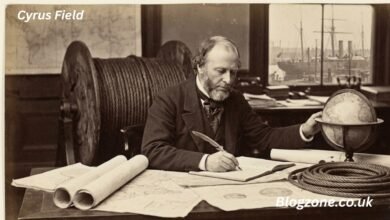
Cyrus Field: The Visionary Entrepreneur Who Changed Global Communication
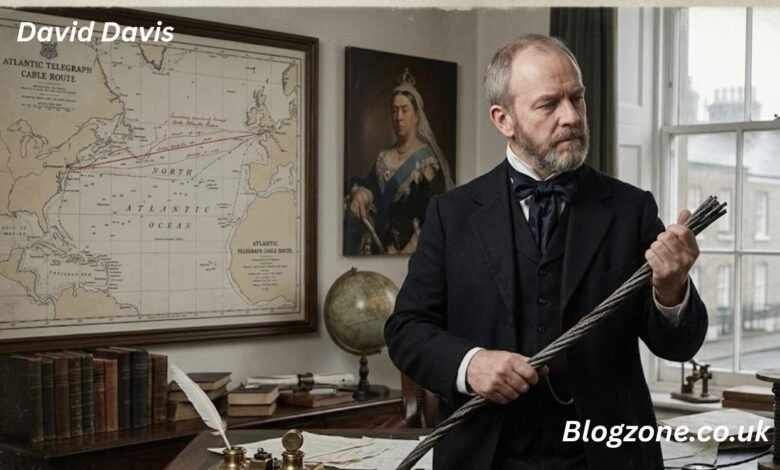
Cyrus Field stands among the most influential entrepreneurs of the nineteenth century, not because he invented a groundbreaking technology, but because he had the determination to transform an ambitious dream into reality. His leadership in establishing the first successful transatlantic telegraph cable forever changed the way people communicated across continents. Before his efforts, messages between Europe and North America depended entirely on ships, often taking weeks to arrive. Field envisioned a world where information could travel beneath the ocean in just minutes, an idea that many considered impossible.
His story is one of persistence, innovation, financial risk, and unwavering belief in scientific progress. Throughout years filled with failures, technical setbacks, and public criticism, Cyrus Field remained committed to his mission. His achievements reshaped international communication, strengthened diplomacy, accelerated commerce, and laid the foundation for the interconnected world we experience today.
Understanding the life of Cyrus Field provides valuable insight into how determination, collaboration, and vision can overcome extraordinary obstacles. His remarkable journey continues to inspire entrepreneurs, engineers, historians, and business leaders around the world.
Early Life and Family Background
Cyrus West Field was born on November 30, 1819, in Stockbridge, Massachusetts. Raised in a respected family, he benefited from an environment that valued education, discipline, and moral responsibility. His father was a prominent clergyman whose influence encouraged hard work and integrity from an early age.
Unlike many famous inventors, Field did not pursue extensive formal education. Instead, he entered the business world while still young, demonstrating an exceptional talent for commerce and organization. At only fifteen years old, he moved to New York City to begin working as a clerk. This decision marked the beginning of a successful business career that would eventually provide him with the financial independence necessary to pursue much larger ambitions.
His early years in business taught him valuable lessons about negotiation, investment, and leadership. These experiences would later prove essential as he managed one of the most ambitious engineering projects in history.
Success Before the Telegraph Project
Before becoming known for international communications, Cyrus Field established himself as a successful businessman. He entered the paper manufacturing industry, where his strategic decisions and business instincts allowed him to build considerable wealth at a relatively young age.
By his early thirties, he had accumulated enough financial success to retire from active business. Many people would have chosen a comfortable life after achieving such prosperity, but Field sought greater challenges. His curiosity and desire to contribute something meaningful to society led him toward scientific and technological ventures.
This willingness to invest both his fortune and reputation into bold projects distinguished him from many other businessmen of his era. Rather than protecting his wealth, he used it to support ideas capable of transforming the future.
The Birth of an Extraordinary Vision
The idea that changed Cyrus Field’s life emerged during discussions about improving international communication. At the time, telegraph systems already connected cities across land, dramatically reducing communication times within countries. However, no reliable method existed to send telegraph messages across the Atlantic Ocean.
Many experts believed that laying thousands of miles of cable beneath the ocean floor was impossible. The engineering challenges appeared overwhelming. Ocean depths were poorly understood, cable technology remained primitive, and repairing underwater lines presented enormous difficulties.
Despite widespread skepticism, Field recognized the tremendous benefits such a connection could provide. Governments could exchange diplomatic messages almost instantly. Businesses could conduct international trade more efficiently. Newspapers could report overseas events within hours instead of weeks.
Rather than dismissing the concept as unrealistic, he embraced it with remarkable confidence and began assembling engineers, investors, scientists, and political supporters who shared his vision.
Building International Partnerships
One of Cyrus Field’s greatest strengths was not technical expertise but his exceptional ability to unite talented individuals around a common goal. He understood that success required cooperation among engineers, governments, financiers, and manufacturers from multiple countries.
He traveled extensively between the United States and Great Britain, meeting influential political leaders, investors, and scientific experts. Convincing these groups required extraordinary patience because the project demanded enormous financial commitments with no guarantee of success.
Field became the public face of the transatlantic cable initiative. He negotiated funding, secured government assistance, organized engineering teams, and maintained investor confidence even during periods of repeated failure.
His leadership demonstrated that visionary entrepreneurs often succeed not by inventing technology themselves but by bringing together the right people and resources.
The Difficult Road to Success
The journey toward establishing the first successful transatlantic cable proved far more difficult than anyone anticipated. Multiple attempts ended in disappointment as cables snapped during installation, electrical signals weakened unexpectedly, and harsh ocean conditions created nearly impossible working environments.
Each failure attracted criticism from newspapers and investors. Many observers declared the entire project a costly fantasy. Financial losses mounted, and public confidence declined sharply.
Yet Cyrus Field refused to abandon his dream. Instead of accepting defeat, he carefully analyzed every setback, learned from technical mistakes, secured additional funding, and prepared for another attempt.
His determination became one of the defining characteristics of the project. While technology gradually improved, it was Field’s persistence that kept the mission alive through years of uncertainty.
This resilience remains one of the most admired aspects of his career and serves as an enduring lesson for entrepreneurs facing repeated obstacles.
The Historic Achievement of 1866
Although an earlier cable briefly functioned in 1858 before failing, true long-term success finally arrived in 1866. Improved cable construction, better engineering methods, and more reliable installation techniques resulted in the first permanently successful transatlantic telegraph cable.
The achievement marked a turning point in global history.
Messages that previously required weeks to cross the Atlantic could now be transmitted within minutes. Governments gained unprecedented speed in diplomatic communication. Financial institutions received international market information almost instantly. Journalists reported overseas developments with remarkable speed.
The successful cable effectively reduced the communication distance between Europe and North America, changing politics, commerce, science, and international relationships forever.
Cyrus Field became internationally celebrated as the driving force behind one of the greatest engineering accomplishments of the nineteenth century.
Economic and Social Impact
The influence of the transatlantic cable extended far beyond technological innovation. It transformed global business by allowing companies to coordinate international operations with unprecedented efficiency. Financial markets became more interconnected as stock prices and commercial information traveled rapidly across continents.
Governments benefited from faster diplomatic communication during periods of political tension and international negotiations. Military planning also evolved as strategic information could be exchanged much more quickly than ever before.
Newspapers entered a new era of reporting. International news reached readers while events remained current rather than becoming outdated during lengthy sea voyages. Public understanding of global affairs expanded significantly as information moved at previously unimaginable speeds.
These developments accelerated globalization decades before modern computers and the internet existed.
Leadership Qualities That Defined Cyrus Field
Several personal qualities contributed significantly to Cyrus Field’s remarkable success.
His persistence allowed him to continue pursuing the project despite repeated technical failures and financial setbacks. Many investors withdrew support, yet Field continued searching for new partnerships and funding opportunities.
His communication skills enabled him to persuade governments, scientists, engineers, and financiers to support a highly uncertain venture. Building trust among such diverse groups required exceptional leadership.
His willingness to embrace calculated risks distinguished him from more cautious businessmen. Rather than avoiding uncertainty, he recognized that groundbreaking achievements often require bold decisions.
Most importantly, Field maintained a long-term perspective. While others focused on immediate obstacles, he remained committed to the broader vision of transforming global communication.
Challenges Later in Life
Although Cyrus Field achieved worldwide recognition following the success of the transatlantic cable, his later years proved considerably more difficult. Like many nineteenth-century entrepreneurs, he invested heavily in various financial ventures.
Some investments failed, reducing much of the fortune he had accumulated during earlier business successes. Economic instability and changing market conditions affected numerous wealthy individuals during this period, and Field was no exception.
Despite financial difficulties, his reputation as the driving force behind the Atlantic cable remained secure. Historians continued to recognize his extraordinary contribution to modern communications regardless of his later business setbacks.
His legacy ultimately rested not on personal wealth but on the lasting transformation he brought to international society.
Influence on Modern Technology
Although today’s internet, satellite communications, fiber-optic networks, and mobile technology differ enormously from nineteenth-century telegraph systems, they all share the same fundamental objective: connecting people across vast distances.
Cyrus Field helped demonstrate that global communication infrastructure could unite continents and transform civilization. His success encouraged future generations to invest in increasingly advanced communication technologies.
Modern submarine fiber-optic cables now carry enormous amounts of internet traffic across oceans, serving billions of people worldwide. These sophisticated systems represent the direct descendants of the pioneering cable project that Field championed more than a century ago.
His vision established the principle that physical barriers should never prevent the rapid exchange of information.
Recognition and Historical Legacy
Historians consistently recognize Cyrus Field as one of the most important business leaders associated with communication history. While inventors often receive greater public attention, successful innovation frequently depends equally on entrepreneurs capable of organizing complex projects and inspiring collaboration.
Museums, history books, engineering societies, and educational institutions continue to highlight his achievements as milestones in technological progress.
His story demonstrates that innovation requires more than brilliant ideas. It demands persistence, financial courage, leadership, international cooperation, and an unwavering commitment to solving difficult problems.
The successful Atlantic cable became a symbol of human determination and engineering excellence, with Cyrus Field remaining its most recognized champion.
Why Cyrus Field Still Matters Today
The modern digital age often focuses on software developers, internet pioneers, and technology companies. However, many of the principles guiding today’s communication networks originated with visionary leaders like Cyrus Field.
His project required global cooperation, substantial investment, scientific experimentation, and confidence in emerging technology. These same elements continue to define modern technological breakthroughs.
Entrepreneurs today can learn valuable lessons from his example. Revolutionary ideas frequently encounter skepticism. Major infrastructure projects require patience and resilience. Long-term success often depends on the ability to unite experts from diverse backgrounds toward a common objective.
Field’s journey reminds us that changing the world rarely happens overnight. Instead, it results from years of determination, continuous improvement, and steadfast belief in a transformative vision.
Conclusion
Cyrus Field occupies a unique place in history as the entrepreneur whose determination helped connect continents through the first successful permanent transatlantic telegraph cable. His leadership transformed global communication, accelerated international business, strengthened diplomacy, and forever changed how information traveled across oceans.
Although he faced repeated failures, financial uncertainty, technical obstacles, and widespread criticism, he never abandoned his goal. His resilience ultimately produced one of the nineteenth century’s greatest engineering accomplishments, creating a communication revolution that continues to influence modern technology.
Today, every international email, video call, financial transaction, and online conversation owes something to the pioneering efforts that began with the Atlantic cable. Cyrus Field’s extraordinary vision proved that impossible dreams can become reality through persistence, collaboration, and courageous leadership. His legacy remains a powerful reminder that determined individuals have the ability to reshape the world and leave an impact that lasts for generations.
Also read