Cyrus Field: The Visionary Entrepreneur Who Connected Continents with the Atlantic Telegraph
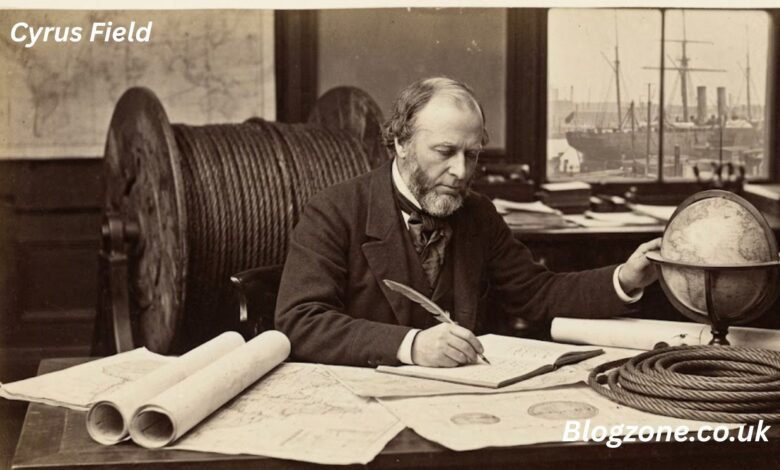
Cyrus Field remains one of the most influential entrepreneurs in the history of communication. Although he was not a scientist or an inventor, his determination, financial leadership, and remarkable ability to unite investors, engineers, and governments helped transform the world. At a time when messages between North America and Europe took weeks to arrive by ship, he imagined a future where information could travel almost instantly beneath the Atlantic Ocean. His ambitious dream eventually became reality through the successful installation of the first permanent transatlantic telegraph cable.
The story of Cyrus Field is one of vision, resilience, and perseverance. Throughout his life, he experienced extraordinary success, devastating failures, financial uncertainty, and public criticism. Yet he continued pursuing his goal despite setbacks that would have discouraged many others. His achievements changed international business, diplomacy, journalism, and personal communication forever.
Today, modern technologies such as fiber-optic cables and the internet owe much to the pioneering efforts of individuals like Cyrus Field. His determination laid the foundation for today’s interconnected world, proving that bold ideas supported by persistence can reshape human civilization.
Early Life and Family Background
Cyrus West Field was born on November 30, 1819, in Stockbridge, Massachusetts, United States. He grew up in a family that valued education, discipline, and hard work. His father was a respected minister whose influence helped shape Cyrus into a determined and responsible young man.
Unlike many famous innovators, Field did not receive extensive formal education. Instead, he entered the business world at an early age, where he quickly developed practical skills in finance, negotiation, and management. These experiences became far more valuable than academic qualifications, preparing him for the enormous business challenges he would later face.
As a teenager, he moved to New York City, which was rapidly becoming America’s commercial center. There he worked for various businesses before establishing his own successful paper manufacturing company. His business instincts proved exceptional, allowing him to accumulate considerable wealth before reaching middle age.
Financial independence gave Cyrus Field something many entrepreneurs lacked—the freedom to pursue projects motivated not only by profit but also by the desire to change the world.
Success in Business Before the Telegraph Project
Before becoming famous for global communication, Cyrus Field had already established himself as a successful businessman. His paper manufacturing company expanded rapidly, supplying products throughout the growing American market.
His business strategy emphasized careful financial planning, efficient management, and building strong relationships with partners and investors. These qualities earned him a reputation as someone capable of organizing large and complicated ventures.
By the age of thirty-three, he had accumulated enough wealth to retire comfortably. Many people would have chosen a life of leisure after achieving such financial success, but Field preferred new challenges. Retirement quickly became boring for someone with his energy and ambition.
His search for meaningful projects ultimately led him toward one of history’s greatest engineering achievements.
The Birth of an Extraordinary Vision
The idea that changed Cyrus Field’s life originated with Frederick Gisborne, who proposed connecting North America through a telegraph network extending toward Newfoundland.
While studying maps and communication routes, Field realized something extraordinary. If telegraph lines reached Newfoundland, the distance across the Atlantic Ocean to Ireland would become much shorter than previously considered.
Instead of limiting communication improvements to North America, why not connect Europe and America directly?
This simple but revolutionary question inspired a project that many experts considered impossible. At the time, laying thousands of miles of cable beneath the ocean floor seemed beyond existing technology. Numerous engineers believed the cable would snap, deteriorate, or simply fail to transmit messages across such immense distances.
Field, however, refused to accept these doubts. Rather than seeing obstacles, he saw opportunities.
Building International Support
Turning an ambitious dream into reality required far more than enthusiasm. Cyrus Field needed enormous financial resources, scientific expertise, political support, and international cooperation.
He traveled extensively between the United States and Great Britain, meeting government officials, investors, engineers, and naval leaders. Convincing so many different groups to support a project with no guarantee of success demanded remarkable communication skills.
Field assembled an impressive team that included respected scientists, experienced engineers, and influential businessmen. Their combined knowledge helped solve numerous technical challenges associated with manufacturing, transporting, and installing thousands of miles of underwater cable.
Securing government assistance also proved essential. Both American and British authorities recognized that faster communication could improve diplomacy, trade, and military coordination. Their support significantly increased the project’s credibility.
Without Cyrus Field’s leadership, these diverse individuals and institutions might never have united behind such a risky undertaking.
The First Atlantic Cable Attempts
The journey toward success was anything but smooth. The first attempts to lay the Atlantic cable encountered repeated failures.
Powerful ocean storms damaged equipment, cables snapped during installation, and technical problems disrupted communication. Each setback resulted in enormous financial losses, disappointing investors and attracting widespread criticism from newspapers and the public.
Many people concluded that the project should be abandoned permanently.
Despite mounting pressure, Cyrus Field remained committed. He continued raising funds, recruiting experts, and refining technical methods. His optimism inspired others to continue working even when success seemed impossible.
One temporary success occurred in 1858 when the first messages crossed the Atlantic. Celebrations erupted across Europe and America as people recognized the historic achievement.
Unfortunately, the cable stopped functioning after only a few weeks.
The disappointment was immense, but Field refused to surrender.
Years of Persistence
The years following the failed cable tested Cyrus Field’s determination more severely than ever before.
Investors became cautious. Public confidence declined. Critics mocked the project as an expensive fantasy. Financial markets fluctuated, making fundraising increasingly difficult.
Yet Field believed that the failure reflected technological limitations rather than flaws in the overall concept.
He spent years organizing new financing, encouraging improved engineering designs, and waiting for advances in manufacturing technology. Better insulation materials, stronger cables, and more capable ships gradually improved the likelihood of success.
His persistence demonstrated an important leadership quality: the willingness to continue despite repeated disappointments.
Many groundbreaking innovations throughout history have required similar patience, and Field’s experience became a classic example of perseverance overcoming adversity.
The Historic Success of 1866
After years of preparation, the decisive expedition took place in 1866.
Using the massive steamship Great Eastern, engineers successfully laid a new transatlantic telegraph cable between Ireland and Newfoundland.
This time, the cable worked reliably.
For the first time in history, messages traveled between Europe and North America within minutes instead of weeks.
Governments immediately recognized the strategic importance of the achievement. Businesses gained faster access to overseas markets. Newspapers received international news with unprecedented speed. Families separated by the Atlantic could communicate far more efficiently than ever before.
The successful cable transformed international communication forever.
Cyrus Field became an international celebrity whose name symbolized determination and visionary leadership.
Economic and Global Impact
The successful transatlantic telegraph produced consequences extending far beyond technology.
International commerce accelerated as businesses exchanged financial information rapidly across continents. Stock markets became more interconnected, enabling investors to respond quickly to changing conditions.
Governments benefited from improved diplomatic communication, reducing misunderstandings and allowing faster responses during international crises.
Journalism also entered a new era. Newspapers no longer depended solely on ships carrying printed reports. Breaking international news could reach readers much faster, fundamentally changing how societies understood global events.
Scientific collaboration expanded because researchers could exchange discoveries more efficiently.
The telegraph effectively made the world smaller, bringing nations closer together through nearly instantaneous communication.
Leadership Qualities That Defined Cyrus Field
Cyrus Field possessed several qualities that distinguished him from many business leaders of his era.
His greatest strength was vision. While others focused on immediate profits, he concentrated on long-term transformation. He recognized possibilities invisible to many contemporaries.
Another important quality was resilience. Failure did not discourage him. Instead, setbacks became opportunities for improvement.
Field also excelled at collaboration. He understood that projects of enormous scale required cooperation among scientists, engineers, governments, investors, and business executives. Rather than seeking personal recognition alone, he built partnerships capable of achieving extraordinary goals.
His financial expertise proved equally valuable. Managing enormous investments while maintaining confidence among supporters demanded exceptional organizational abilities.
These leadership characteristics remain relevant for entrepreneurs today.
Later Business Ventures and Financial Challenges
Although remembered primarily for the Atlantic cable, Cyrus Field participated in numerous other business activities during his later years.
Some ventures succeeded, while others performed poorly. Economic downturns and speculative investments eventually reduced much of the fortune he had accumulated.
The financial panic of the late nineteenth century affected many wealthy businessmen, including Field. Despite earlier triumphs, he experienced significant financial difficulties during his later years.
Nevertheless, these setbacks did little to diminish his historical importance.
His greatest contribution had already reshaped international communication permanently, ensuring his place among the world’s most influential entrepreneurs.
Personal Life
Away from business, Cyrus Field valued family life and maintained close relationships with relatives and friends.
Those who knew him often described him as energetic, optimistic, and deeply committed to his projects. Even during difficult periods, he displayed remarkable confidence that success remained achievable.
His ability to inspire others became one of his defining characteristics. Investors, engineers, and political leaders frequently trusted his judgment because of his sincerity and unwavering commitment.
Although fame followed his achievements, he remained focused primarily on accomplishing ambitious goals rather than seeking personal publicity.
Lasting Legacy
The legacy of Cyrus Field extends well beyond the telegraph itself.
Modern international communication networks—including submarine fiber-optic cables carrying internet traffic—follow the same fundamental concept he helped pioneer.
Every day, billions of emails, phone calls, financial transactions, and digital communications travel through underwater cable systems spanning the world’s oceans. While today’s technology differs dramatically from nineteenth-century telegraph cables, the principle remains remarkably similar.
Field demonstrated that oceans need not separate civilizations but could instead become pathways connecting them.
Historians often recognize him as one of the architects of globalization because his work dramatically reduced communication barriers between continents.
His accomplishments also illustrate how entrepreneurs can drive technological progress even without personally inventing new devices. Leadership, organization, persistence, and vision can be just as important as scientific discovery.
Why Cyrus Field Still Matters Today
Modern society depends heavily on instant communication. Businesses negotiate international contracts within minutes. Families communicate across continents through digital platforms. Emergency information travels worldwide almost instantly.
These conveniences exist partly because pioneers like Cyrus Field believed faster global communication was possible despite widespread skepticism.
His story teaches valuable lessons about innovation. Revolutionary projects often appear impossible before becoming ordinary. Success frequently requires years of persistence, repeated experimentation, and unwavering confidence.
Students of business, engineering, leadership, and history continue studying his accomplishments because they demonstrate how determination can overcome enormous technical and financial obstacles.
As technology continues advancing through satellite networks, artificial intelligence, and faster internet infrastructure, the foundational vision of connecting people across vast distances remains as relevant as ever.
Conclusion
Cyrus Field occupies a unique position in the history of global communication. Without inventing the telegraph itself, he became the driving force behind one of the nineteenth century’s greatest engineering accomplishments. His relentless pursuit of a transatlantic communication network transformed international business, diplomacy, journalism, and everyday life.
Despite repeated failures, financial uncertainty, and public criticism, he never abandoned his vision. His leadership united scientists, engineers, investors, and governments in pursuit of an idea that permanently changed the world.
Today, every international message sent through underwater communication cables reflects the pioneering spirit that Cyrus Field championed more than a century ago. His remarkable journey reminds us that extraordinary progress often begins with one individual willing to believe in an idea that others consider impossible. Through courage, persistence, and visionary leadership, Cyrus Field helped connect continents and opened a new chapter in the history of human communication.