Adam Savage and Jamie Hyneman: The Makers Behind MythBusters
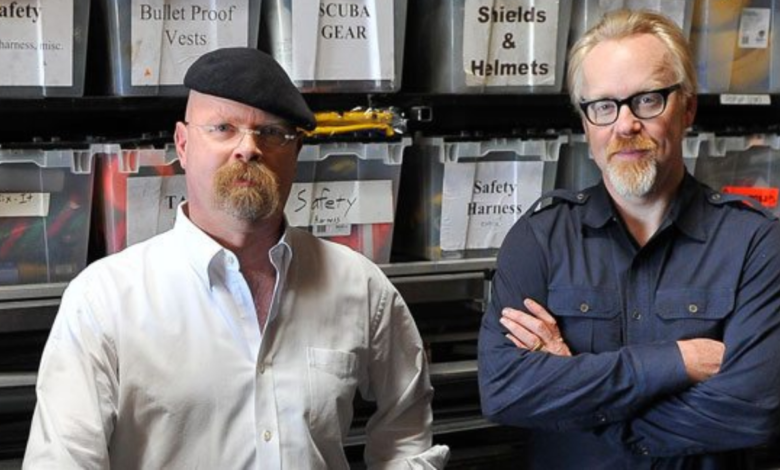
Adam Savage and Jamie Hyneman became widely known as the hosts of MythBusters, the television series that turned scientific testing, engineering, special effects, and hands-on experimentation into popular entertainment. Although the two had very different personalities on screen, they shared a strong interest in building things, solving practical problems, and testing whether popular claims could survive real-world experiments. Their partnership helped make MythBusters one of the best-known science-oriented entertainment programs of its era.
The two men also brought substantial professional experience to the program. Before MythBusters, both had worked in special effects and fabrication, giving them the practical skills needed to construct experimental equipment, props, models, and large-scale test setups. Their combined background helped the show move beyond simply discussing myths and instead demonstrate them through controlled experiments.
Who Are Adam Savage and Jamie Hyneman?
Adam Savage is an American special-effects designer, maker, television host, and science communicator. Born on July 15, 1967, in New York City, Savage developed an interest in making and constructing things at an early age. His professional career eventually took him into special effects, where he worked on commercials and major Hollywood productions. His credits include projects such as Star Wars: Episode I – The Phantom Menace, Star Wars: Episode II – Attack of the Clones, Galaxy Quest, and The Matrix Reloaded.
Jamie Hyneman, born September 25, 1956, in Marshall, Michigan, followed a different path before entering the entertainment industry. He studied Russian at Indiana University and spent part of his early career working in the Caribbean as a charter-boat captain and diving professional. He later moved into special effects, eventually becoming associated with M5 Industries, the San Francisco-area effects workshop that became closely connected with MythBusters.
How Adam Savage and Jamie Hyneman Met
Savage and Hyneman’s professional relationship began before MythBusters. Their shared work in the special-effects industry brought them together on projects, and Savage eventually worked with Hyneman at M5 Industries. Their practical knowledge of fabrication, modeling, mechanics, and special effects made them natural collaborators.
When the concept for MythBusters was being developed, Hyneman was involved in the initial production process. Savage was brought into the project, helping create the combination of experimentation and entertainment that became central to the program. The series premiered on Discovery Channel in January 2003.
Their previous experience was particularly important because MythBusters required far more than television presenting. Each episode could involve building machines, constructing test environments, developing measurement systems, and performing experiments repeatedly to obtain useful results.
The Success of MythBusters
MythBusters became famous for investigating urban legends, popular misconceptions, movie scenes, and unusual claims. Instead of simply explaining whether something was true, Savage and Hyneman generally attempted to test the claim themselves.
Discovery states that the original version of the show ran for 14 years, producing 279 episodes and testing more than 1,000 myths. The original series ended in March 2016.
The show’s appeal came partly from its unusual combination of science and entertainment. Experiments could involve sophisticated engineering one moment and an enormous practical-effects setup the next. The hosts frequently created custom devices specifically for a particular experiment.
Popular Science described the program as providing scientific reality checks through hands-on experiments rather than relying only on expert explanations.
Why Their Personalities Worked Together
One of the defining features of Adam Savage and Jamie Hyneman was the contrast between their personalities. Savage was generally more energetic and expressive on camera, while Hyneman was known for his quieter, methodical approach.
That difference became an important part of the show’s identity. Their approaches to solving problems could vary, but both were interested in practical experimentation and building physical solutions. In interviews, the pair discussed their shared enthusiasm for hands-on work and the similarities in how they approached special-effects challenges.
The contrast also gave viewers two different ways of looking at the same problem. Savage often brought curiosity and improvisation, while Hyneman frequently emphasized simplicity, planning, and engineering practicality.
Their Special-Effects Background
Before becoming television personalities, both Savage and Hyneman had established careers in special effects.
Savage worked across several creative disciplines, including animation, graphic design, model making, carpentry, welding, scenic painting, and fabrication. His film work gave him experience with materials and techniques that later became useful for MythBusters.
Hyneman’s background was similarly diverse. Sigma Xi notes that after his time in the Caribbean, he entered the special-effects field and worked on films and commercials before eventually managing a model shop at Colossal Pictures. His later work included a range of mechanical and effects-related projects.
This experience explains why MythBusters frequently featured elaborate physical constructions. The hosts were not simply presenters watching technicians do the work; their professional backgrounds gave them the ability to participate directly in designing and constructing experiments.
Some of the Most Memorable MythBusters Experiments
Over the years, MythBusters investigated hundreds of ideas. The subjects ranged from everyday assumptions to famous scenes from movies and television.
One notable category involved movie myths. The team tested whether cinematic actions could actually happen under real-world conditions. They also investigated claims involving vehicles, explosions, projectiles, water, materials, human behavior, and mechanical systems.
The series also developed a strong relationship with popular franchises. For example, the team tested several Star Wars concepts, including questions surrounding stormtrooper blaster fire and other cinematic scenarios. StarWars.com highlighted how the program used practical experimentation to examine famous fictional ideas.
The important point was not always whether a myth was simply true or false. The experiments often demonstrated why a result occurred, what conditions affected it, and what assumptions were necessary for the claim to work.
Adam Savage After MythBusters
After the original MythBusters ended, Adam Savage continued working in making, engineering education, television, and online media.
His platform Tested became a major outlet for his interests in fabrication, tools, technology, costumes, props, and detailed builds. Smithsonian’s National Air and Space Museum has also featured Savage’s work, including his efforts to build a wearable replica inspired by NASA’s next-generation spacesuit design.
Savage also hosted Savage Builds and became involved with MythBusters Jr. His 2019 book, Every Tool’s a Hammer, focused on his experiences as a maker and his approach to creativity and construction.
His post-MythBusters work demonstrates that making remained a central part of his career rather than simply being a television persona.
What Jamie Hyneman Did After MythBusters
Jamie Hyneman continued his interest in engineering, invention, and practical technology after the original MythBusters run.
His work has included robotics and mechanical engineering projects. He has also been involved in academic activities and was appointed a professor of practice at LUT University in Finland, where he worked with students on topics connected to engineering and prototyping.
Hyneman has maintained a reputation for approaching problems through engineering and experimentation. His career outside television shows that MythBusters was only one part of a much broader professional background.
Are Adam Savage and Jamie Hyneman Still a Team?
Adam Savage and Jamie Hyneman are best known as the original co-hosts of MythBusters, but their television partnership ended with the conclusion of the original series in 2016. The two subsequently pursued separate professional projects.
Their separation from regular television collaboration did not erase the impact of their earlier work. For more than a decade, they were closely associated with a style of science communication that emphasized experimentation, skepticism, practical construction, and curiosity.
Their work also helped demonstrate that science could be presented through entertaining demonstrations without removing the underlying process of testing and investigation.
The Legacy of Adam Savage and Jamie Hyneman
The influence of Adam Savage and Jamie Hyneman extends beyond the television series itself. MythBusters encouraged viewers to question assumptions and consider how claims could be tested.
The show’s approach was especially distinctive because it made experimentation visible. Instead of presenting science as something that happens only inside laboratories, Savage and Hyneman showed viewers that measurement, engineering, failure, redesign, and repetition can all be part of investigating a question.
Their program also helped popularize the modern maker culture that combines science, engineering, craftsmanship, electronics, fabrication, and creativity. Popular Science noted that the series demonstrated a particularly unusual and hands-on interpretation of DIY culture.
For Adam Savage, that maker philosophy continues through Tested and his ongoing projects. For Jamie Hyneman, engineering, invention, and education have remained important parts of his professional identity.
Conclusion
Adam Savage and Jamie Hyneman became recognizable figures through MythBusters, but their careers were built on much more than television. Both entered the program with substantial experience in special effects, fabrication, engineering, and practical problem-solving.
Their different personalities helped create a memorable television partnership, while their shared commitment to testing ideas gave MythBusters its distinctive character. From Hollywood effects work to elaborate experiments and later independent projects, their careers demonstrate how creativity and technical knowledge can work together.
The lasting appeal of Adam Savage and Jamie Hyneman comes from the central idea behind their work: rather than accepting a claim simply because it sounds believable, build a test, gather evidence, examine the result, and remain willing to change your conclusion when the evidence demands it.