Fujifilm X-A1 Digital Camera: Complete Review, Features, Specifications, and Buying Guide
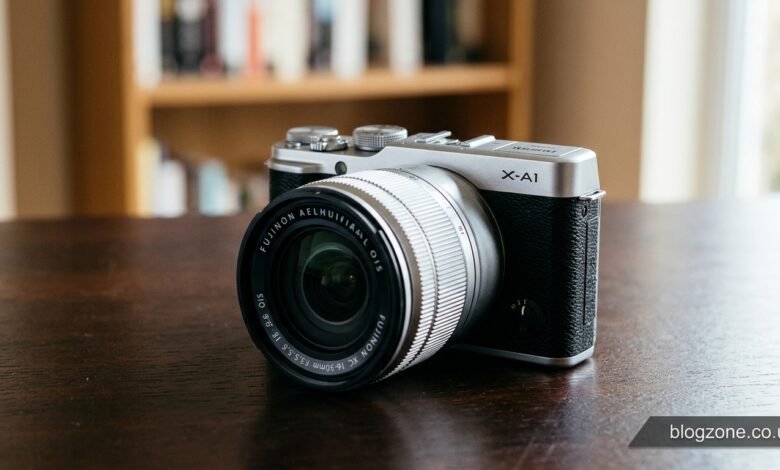
The Fujifilm X-A1 digital camera is a compact mirrorless camera designed for photography enthusiasts, beginners, and travelers who want better image quality than a typical smartphone can provide. Introduced in 2013, it belongs to Fujifilm’s X-series of interchangeable-lens cameras and combines a 16.3-megapixel APS-C sensor, manual shooting controls, a tilting LCD screen, and built-in Wi-Fi connectivity.
Although the Fujifilm X-A1 is an older camera, it can still be a useful option for people interested in everyday photography, portraits, travel pictures, and learning the fundamentals of photography. Its lightweight body and compatibility with Fujifilm X-mount lenses offer flexibility without the bulk of many traditional DSLR cameras.
This guide covers the camera’s specifications, image quality, design, performance, advantages, limitations, and the factors to consider before purchasing one in the secondhand market.
Fujifilm X-A1 Digital Camera Overview
The Fujifilm X-A1 was introduced as an entry-level mirrorless interchangeable-lens camera. It was developed for users who wanted a relatively affordable way to enter Fujifilm’s X-series system while retaining the ability to change lenses according to different photographic needs.
One of its most important features is the 16.3-megapixel APS-C CMOS sensor. This sensor is considerably larger than the sensors found in many older compact digital cameras and can produce detailed photographs when paired with an appropriate lens and good shooting technique. The camera also offers manual exposure controls, allowing users to adjust shutter speed, aperture, and ISO settings rather than relying entirely on automatic modes.
The X-A1 is particularly suitable for casual photographers, students, hobbyists, and people exploring mirrorless photography. It is not a modern professional camera, but its combination of interchangeable lenses, RAW image capture, and physical controls makes it more flexible than many basic point-and-shoot models.
Because it was released more than a decade ago, buyers should also understand that its autofocus system, video features, and wireless capabilities are limited compared with newer cameras.
Design and Build Quality
The Fujifilm X-A1 features a compact, rangefinder-style design with a lightweight polycarbonate body. It weighs approximately 330 grams with the battery and memory card installed, making it convenient to carry during holidays, city walks, family events, and daily photography. Its compact dimensions of approximately 117 × 67 × 39 mm also make it easier to pack than many traditional DSLR cameras.
The camera includes a textured grip that helps users hold it comfortably while taking pictures. Its physical controls provide access to important shooting settings, although beginners may need some time to understand the menu system and exposure options.
One limitation is the absence of weather sealing. The camera is not designed to withstand heavy rain, dust, or harsh environmental conditions. Users should protect it from moisture and avoid exposing it to extreme weather. Its lightweight construction is practical for everyday use, but it should still be handled carefully, especially when changing lenses.
Sensor and Image Quality
Image quality is one of the strongest reasons to consider the Fujifilm X-A1 digital camera. Its 16.3-megapixel APS-C CMOS sensor measures approximately 23.6 × 15.6 mm and captures images at a maximum resolution of 4896 × 3264 pixels. This resolution is sufficient for social media, websites, family photo albums, and many standard printing requirements.
The APS-C sensor gives the camera a useful advantage over many older compact cameras, particularly when taking photographs in good lighting. Images can retain fine details, and the photographer has more control over depth of field when using suitable lenses and aperture settings.
The camera uses a conventional Bayer color filter rather than Fujifilm’s X-Trans sensor design found in some other X-series models. This does not make it unsuitable for photography. It simply represents a different sensor design within the product range.
The X-A1 supports JPEG and RAW image formats. JPEG is convenient for everyday sharing because images are processed in-camera. RAW files preserve more editing flexibility, allowing photographers to adjust exposure, white balance, shadows, and highlights in compatible editing software.
For the best results, use lower ISO settings whenever possible, expose carefully, and select a lens suited to the subject. Image quality will also depend on lighting, lens condition, focus accuracy, and the photographer’s technique.
Lens Compatibility and Photography Options


7
The Fujifilm X-A1 uses the Fujifilm X-mount system, allowing photographers to choose from compatible interchangeable lenses. This flexibility is a major advantage over cameras with permanently attached lenses.
The camera was commonly sold with the XC 16–50mm f/3.5–5.6 OIS kit lens. On its APS-C sensor, this provides a field of view roughly equivalent to 24–76mm on a full-frame camera. It is a versatile range for everyday photographs, landscapes, street scenes, family portraits, and travel pictures.
Different lenses can expand its capabilities:
- Wide-angle lenses: Useful for landscapes, architecture, and interior photography.
- Standard zoom lenses: Suitable for travel, family events, and everyday use.
- Prime lenses: Often provide wider apertures for portraits and low-light situations.
- Telephoto lenses: Help photograph distant subjects, wildlife, and outdoor sports.
However, buyers should verify lens compatibility before purchasing. Some newer lenses may have features that the older camera cannot fully use, and third-party lenses may require specific mount versions or firmware support.
The X-A1 does not have in-body image stabilization. If stabilization is important, consider a compatible lens with optical image stabilization, such as the kit lens. This can help reduce blur from small hand movements, although it cannot freeze a moving subject.
Autofocus and Shooting Performance
The Fujifilm X-A1 uses contrast-detection autofocus. It supports single-area focusing, multi-area selection, tracking, continuous autofocus, and face detection. These options cover many ordinary photography situations, including portraits, still subjects, and casual travel photography.
For stationary subjects, autofocus can deliver satisfactory results when the camera has enough light and the subject provides clear contrast. Manual focus is also available for situations in which the photographer wants more direct control.
The camera can shoot continuously at approximately 5.6 frames per second under suitable conditions. This is useful for capturing several moments during family activities, pets playing, or casual outdoor events. Nevertheless, the autofocus system is older than those found in current mirrorless cameras, so tracking unpredictable movement can be more challenging.
For action photography, focus accuracy depends on the subject, lighting, lens, and selected shooting settings. Sports photographers and people who frequently photograph fast-moving wildlife may benefit more from a newer camera with improved subject tracking and faster autofocus.
For beginners, the X-A1 remains a useful learning tool because it supports automatic modes as well as aperture priority, shutter priority, and full manual exposure.
LCD Screen and Connectivity
The Fujifilm X-A1 includes a 3-inch tilting LCD screen with approximately 920,000 dots. The screen allows photographers to compose pictures, review images, change settings, and navigate the camera’s menus. Its tilting design is especially helpful when shooting from low angles or holding the camera above eye level.
Unlike modern cameras with fully articulated touchscreens, the X-A1 does not offer touchscreen operation. It also lacks a built-in electronic viewfinder, meaning users generally compose their shots through the rear LCD. This can be less convenient in bright sunlight, when screen visibility may be reduced.
Built-in Wi-Fi is another useful feature. It supports wireless image transfer to compatible devices and remote shooting functions through supported applications. However, the camera was designed for an older generation of mobile software, so compatibility with current smartphones and applications may vary.
Before relying on wireless connectivity, check whether the required application still works with your phone’s operating system. A memory card reader or USB-based transfer may be a more dependable alternative for moving photographs to a computer.
Video Recording Capabilities
The Fujifilm X-A1 can record Full HD video at 1920 × 1080 resolution and 30 frames per second. It also supports 1280 × 720 HD recording at 30 frames per second. Videos are recorded in MOV format using H.264 compression, with stereo audio support.
These capabilities are adequate for basic home videos, short travel clips, family recordings, and simple creative projects. The interchangeable-lens system also gives users some flexibility over framing and background appearance.
However, the camera’s video functions are limited by modern standards. It does not offer 4K recording, and its autofocus and video controls are less advanced than those on newer mirrorless models. Recording duration is also limited, with specifications listing approximately 14 minutes for a continuous Full HD clip and 27 minutes for an HD clip under the stated conditions.
For professional video production, frequent vlogging, or content creation that requires advanced autofocus, a microphone workflow, and modern video formats, a newer camera would generally be a better choice.
8. Battery Life and Storage
The X-A1 uses the Fujifilm NP-W126 rechargeable battery. Its rated battery life is approximately 350 photographs per charge under the CIPA testing standard. Actual results vary depending on screen use, flash photography, wireless connectivity, temperature, and battery condition.
Since this is an older camera, the condition of a used battery matters. A battery that has experienced years of use may hold less charge than a new one. Buyers should check whether the camera comes with a working battery and charger, and consider purchasing a compatible replacement if needed.
For storage, the camera supports SD, SDHC, and SDXC memory cards, including compatible UHS-I cards. It offers a single memory-card slot, so photographers cannot simultaneously record backups to a second card.
For everyday use, a reliable memory card with enough capacity for JPEG images, RAW files, and videos should be sufficient. If you plan to shoot RAW frequently, remember that these files require more storage space than standard JPEG photographs.
Fujifilm X-A1 Digital Camera: Pros and Cons
Understanding the advantages and disadvantages can help you decide whether this camera suits your photography needs.
| Pros | Cons |
|---|---|
| 16.3MP APS-C sensor | Older autofocus technology |
| Interchangeable X-mount lenses | No electronic viewfinder |
| Lightweight, compact body | No 4K video |
| Tilting 3-inch LCD screen | No touchscreen |
| JPEG and RAW shooting | No in-body stabilization |
| Built-in Wi-Fi | Older app compatibility |
| Manual exposure controls | No weather sealing |
The biggest advantage is its combination of a relatively large sensor and interchangeable lenses in a small body. Its biggest disadvantages are its age and the absence of features that have become common in modern cameras.
Is the Fujifilm X-A1 Worth Buying?
The Fujifilm X-A1 can be worth buying if you want an affordable used mirrorless camera for learning photography, taking everyday pictures, or experimenting with different lenses. Its 16.3MP sensor remains capable of producing useful photographs, especially in good lighting.
It may appeal to students, beginners, hobby photographers, and travelers who do not need the latest autofocus technology or high-resolution video. It can also be a reasonable backup camera if you already own compatible Fujifilm X-mount lenses.
However, the purchasing decision depends heavily on the used price and the condition of the equipment. The X-A1 has been discontinued, so it is generally found on the secondhand market rather than as a new camera from regular retail stock.
Before buying, check the sensor for dust or damage, test the autofocus, inspect the LCD, verify the flash and Wi-Fi functions, and take photographs at several shutter speeds. Check the battery, charger, memory-card slot, lens mount, and lens optics as well.
Compare the total cost with newer used mirrorless cameras. A newer model may provide better autofocus, video features, battery efficiency, and smartphone compatibility. If the X-A1 is significantly cheaper and meets your needs, it can still offer good value.
Frequently Asked Questions
1. How many megapixels does the Fujifilm X-A1 have?
The Fujifilm X-A1 has a 16.3-megapixel APS-C CMOS sensor and a maximum still-image resolution of 4896 × 3264 pixels.
2. Does the Fujifilm X-A1 have Wi-Fi?
Yes. It has built-in Wi-Fi for supported wireless image transfer and remote-control functions. Compatibility with current phones and software should be checked before purchase.
3. Can the Fujifilm X-A1 record video?
Yes. It records Full HD video at 1080p and 30 frames per second, as well as 720p video. It does not support 4K recording.
4. Which lenses work with the Fujifilm X-A1?
It uses Fujifilm X-mount lenses. Always verify compatibility and consider whether a particular lens includes optical image stabilization.
5. Does the Fujifilm X-A1 have a viewfinder?
No. It does not have a built-in electronic or optical viewfinder. Composition is handled through its 3-inch tilting rear LCD screen.
6. Is the Fujifilm X-A1 good for beginners?
Yes. Its automatic modes, manual controls, RAW support, and interchangeable lenses make it suitable for learning photography. Its older autofocus system may be less suitable for fast-moving subjects.
7. Is the Fujifilm X-A1 still worth buying?
It can be a sensible budget option if it is in good working condition and priced appropriately. Compare it with newer used cameras before making a final decision.
Conclusion
The Fujifilm X-A1 digital camera remains a practical entry-level mirrorless option for people who value portability, interchangeable lenses, and straightforward photography controls. Its 16.3-megapixel APS-C sensor, tilting LCD, RAW support, and Full HD video capabilities provide a useful foundation for everyday creative work.
Nevertheless, its lack of a viewfinder, modern autofocus features, 4K video, and in-body stabilization limits its appeal for demanding photography and video projects. Because the camera is discontinued, its value depends on its condition, the included lens, and the asking price.
If your main goal is to learn photography or capture everyday moments without spending heavily on a new camera system, the Fujifilm X-A1 may be worth considering. If you need advanced autofocus, professional video capabilities, or more modern connectivity, compare newer alternatives before buying.