Courant Institute of Mathematical Sciences: A Global Leader in Mathematics and Computer Scienc
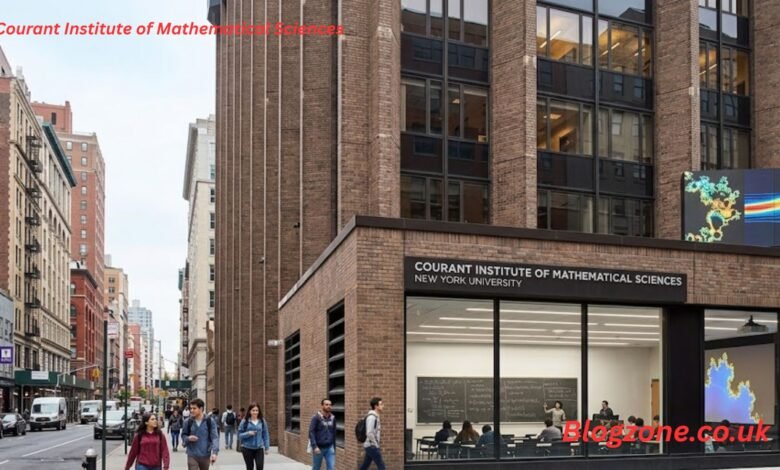
The Courant Institute of Mathematical Sciences stands among the world’s most respected centers for mathematics, computer science, and scientific research. As one of the leading academic institutions dedicated to advancing mathematical knowledge, it has built a reputation for excellence through decades of groundbreaking discoveries, innovative teaching methods, and influential research. Located in New York City as part of New York University (NYU), the institute has attracted some of the brightest minds from around the globe, making it a destination for students, researchers, and professionals seeking to contribute to the future of science and technology.
Since its establishment, the institute has continuously pushed the boundaries of mathematical thinking. Its contributions extend beyond theoretical mathematics into practical applications that influence engineering, artificial intelligence, finance, medicine, data science, and countless other fields. The combination of exceptional faculty, cutting-edge research facilities, and a collaborative academic environment has helped shape generations of mathematicians and computer scientists. Today, the institute continues to inspire innovation while maintaining its position as one of the most prestigious mathematical institutions worldwide.
The History and Foundation of the Institute
The origins of the Courant Institute date back to the early twentieth century, when mathematical sciences were rapidly evolving. The institute was named after Richard Courant, a distinguished mathematician whose vision transformed mathematical education and research. After leaving Europe during a period of political unrest, Courant joined New York University and established a research environment that emphasized collaboration, practical problem-solving, and interdisciplinary studies.
Richard Courant believed mathematics should not remain confined to abstract theories but should also address real-world challenges. This philosophy became the foundation of the institute’s educational approach. Over the decades, the institution expanded its academic departments, welcomed internationally recognized scholars, and established partnerships with industries and government agencies. Through continuous investment in research and education, it earned international recognition for producing groundbreaking discoveries that continue to shape modern science.
The institute’s historical growth reflects the changing needs of society. As technology advanced, it embraced emerging fields such as computer science, numerical analysis, computational biology, machine learning, and data science. This ability to adapt while maintaining academic excellence has been one of its defining strengths throughout its history.
Academic Excellence and Educational Philosophy
Academic excellence remains the defining characteristic of the Courant Institute of Mathematical Sciences. The institute focuses on developing analytical thinking, creativity, and advanced problem-solving abilities rather than simply teaching formulas or memorization. Students are encouraged to understand the fundamental principles behind mathematical concepts while learning how these principles can solve practical problems across various industries.
Courses are carefully designed to combine theoretical knowledge with computational techniques and research experiences. Students regularly participate in seminars, workshops, collaborative projects, and independent research under the supervision of experienced faculty members. This educational model helps graduates develop both deep technical expertise and practical skills that employers highly value.
Faculty members include internationally recognized mathematicians, computer scientists, and researchers who actively contribute to scientific literature. Their involvement in cutting-edge research ensures that classroom instruction reflects the latest developments in mathematical sciences. Students benefit from direct interaction with experts who are shaping the future of their respective fields.
World-Class Research Environment
Research is one of the most significant strengths of the institute. Every year, researchers publish influential papers that advance knowledge across numerous mathematical and computational disciplines. Their work addresses both theoretical questions and practical applications that affect industries worldwide.
Major research areas include applied mathematics, pure mathematics, computational mathematics, machine learning, artificial intelligence, data science, computer vision, robotics, cryptography, optimization, mathematical biology, scientific computing, and numerical analysis. Researchers frequently collaborate with experts from engineering, medicine, economics, physics, and environmental science to solve complex interdisciplinary problems.
The institute also hosts numerous research centers and collaborative initiatives where faculty, graduate students, and visiting scholars work together. These collaborations often produce innovative algorithms, computational models, and mathematical frameworks that influence technological development across multiple sectors.
Outstanding Mathematics Programs
Mathematics remains at the heart of the institute’s identity. Students receive comprehensive training in both pure and applied mathematics while exploring advanced topics that prepare them for research and professional careers.
Pure mathematics programs focus on algebra, geometry, topology, number theory, analysis, probability, and mathematical logic. These disciplines form the theoretical foundation upon which many scientific discoveries are built.
Applied mathematics programs emphasize practical problem-solving through mathematical modeling, optimization, differential equations, computational methods, and numerical simulations. Students learn how mathematical techniques can solve challenges in engineering, economics, healthcare, finance, environmental science, and technology.
Graduate students often contribute to original research while working closely with faculty advisors, allowing them to develop independent research skills that prepare them for academic and industrial careers.
Leadership in Computer Science
The institute has earned international recognition for its computer science programs. These programs combine strong theoretical foundations with practical applications, enabling students to understand both the principles of computing and the technologies driving modern innovation.
Students explore subjects including algorithms, software engineering, programming languages, operating systems, cybersecurity, distributed computing, databases, graphics, networking, artificial intelligence, machine learning, and human-computer interaction. Faculty members continuously update curricula to reflect rapidly evolving technologies while maintaining rigorous academic standards.
Research in computer science frequently intersects with mathematics, creating opportunities for students to tackle highly complex computational challenges using advanced mathematical techniques. This interdisciplinary approach prepares graduates for leadership roles in technology companies, research institutions, and entrepreneurial ventures.
Artificial Intelligence and Machine Learning Innovation
Artificial intelligence has become one of the institute’s most exciting research areas. Faculty members and students investigate new machine learning algorithms, deep learning architectures, natural language processing systems, computer vision models, and autonomous decision-making technologies.
Mathematics plays a central role in AI development. Researchers use probability theory, optimization methods, statistics, and linear algebra to improve algorithm performance and reliability. Their work contributes to applications ranging from medical diagnosis and autonomous vehicles to financial forecasting and scientific discovery.
Students participating in AI research gain valuable experience working on real-world projects while learning the mathematical foundations behind intelligent systems.
Scientific Computing and Numerical Analysis
Scientific computing represents another area where the institute has achieved international recognition. Researchers develop computational techniques capable of solving mathematical problems too complex for traditional analytical methods.
Numerical analysis focuses on designing efficient algorithms for approximating solutions to equations that arise in engineering, physics, biology, finance, and environmental science. These methods allow scientists to simulate physical systems, predict natural phenomena, optimize industrial processes, and analyze massive datasets.
The institute continues to produce influential research in high-performance computing, parallel computing, computational fluid dynamics, and large-scale numerical simulations.
Student Life and Academic Community
Life at the institute extends beyond classrooms and research laboratories. Students become part of a vibrant academic community where intellectual curiosity is encouraged through seminars, conferences, discussion groups, and collaborative research projects.
Because the institute is located in New York City, students enjoy access to museums, libraries, technology companies, financial institutions, research organizations, and cultural attractions. This dynamic environment creates opportunities for internships, networking, and professional development that complement academic learning.
Student organizations frequently organize academic competitions, guest lectures, coding events, mathematical workshops, and social gatherings that foster collaboration among students from diverse backgrounds.
International Reputation and Global Partnerships
The institute maintains strong relationships with universities, research laboratories, government agencies, and technology companies worldwide. These partnerships encourage international collaboration, faculty exchanges, student mobility programs, and joint research initiatives.
Researchers regularly participate in international conferences where they present groundbreaking findings and establish collaborations with leading scientists from around the world. Visiting scholars contribute fresh perspectives while expanding the institute’s global research network.
Its graduates work in universities, research institutes, multinational corporations, financial organizations, healthcare institutions, and technology startups across numerous countries, further strengthening its international reputation.
Career Opportunities for Graduates
Graduates from the Courant Institute of Mathematical Sciences enjoy exceptional career opportunities due to their advanced analytical and computational skills. Employers consistently seek professionals capable of solving complex problems using mathematical reasoning and modern computational techniques.
Many graduates pursue academic careers as university professors or researchers, while others join leading technology companies working in software engineering, artificial intelligence, cybersecurity, cloud computing, or data science. Financial institutions hire graduates for quantitative analysis, risk management, and algorithmic trading.
Healthcare organizations employ computational scientists to improve medical imaging, disease modeling, and bioinformatics. Government agencies recruit mathematical experts for national security, environmental modeling, public policy analysis, and scientific research. Consulting firms also value graduates for their ability to analyze complex business challenges using mathematical models.
Innovation Across Industries
The institute’s influence reaches far beyond academia. Mathematical research conducted within its departments contributes directly to technological advancements in transportation, healthcare, manufacturing, telecommunications, renewable energy, logistics, finance, and digital communications.
Modern smartphones, internet search engines, navigation systems, weather forecasting, medical imaging equipment, financial forecasting tools, and artificial intelligence applications all rely on mathematical concepts developed through decades of research similar to that conducted at institutions like the Courant Institute.
Industry partnerships allow researchers to translate theoretical discoveries into practical technologies that improve everyday life while driving economic growth.
Future Vision and Continuing Excellence
As technology continues evolving, the institute remains committed to addressing emerging scientific challenges through innovative research and education. Areas such as quantum computing, advanced artificial intelligence, computational biology, climate modeling, cybersecurity, and large-scale data analytics are expected to receive increasing attention in the coming years.
Faculty members continue expanding interdisciplinary collaborations while integrating new technologies into teaching and research. Investments in computing infrastructure, research laboratories, and international partnerships ensure the institute remains at the forefront of scientific innovation.
Its commitment to excellence, rigorous academic standards, and collaborative culture positions it to remain a global leader in mathematical sciences for generations to come.
Conclusion
The Courant Institute of Mathematical Sciences represents one of the world’s premier institutions for mathematics, computer science, and interdisciplinary research. Its rich history, internationally respected faculty, outstanding academic programs, and groundbreaking research have made it a driving force behind countless scientific and technological advancements.
Students who join the institute become part of a community dedicated to discovery, innovation, and academic excellence. Whether pursuing pure mathematics, applied mathematics, computer science, artificial intelligence, or scientific computing, they receive an education that combines deep theoretical understanding with practical problem-solving skills.
As global challenges become increasingly complex, the importance of mathematical sciences continues to grow. The Courant Institute remains uniquely positioned to educate future leaders, produce transformative research, and contribute solutions that shape science, technology, industry, and society for decades to come.
Also read