Associate Justice of the Supreme Court of the United States: Understanding the Nation’s Highest Judicial Office
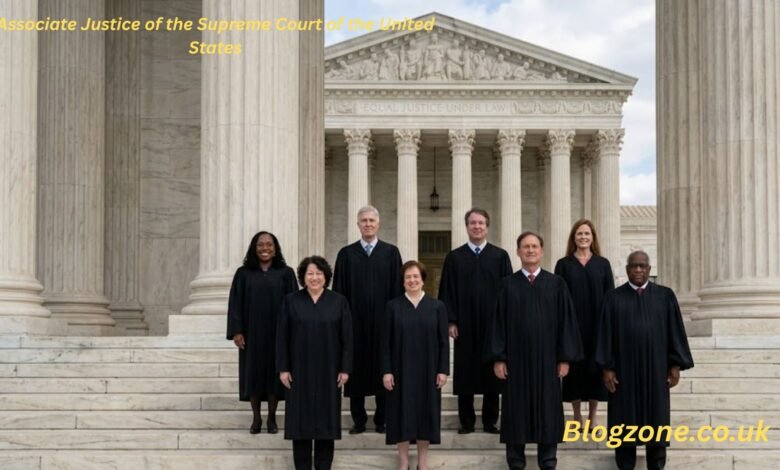
The Associate Justice of the Supreme Court of the United States holds one of the most influential and respected positions in the American legal system. As members of the nation’s highest court, Associate Justices play a vital role in interpreting the Constitution, resolving disputes involving federal law, and shaping the future of the United States through landmark judicial decisions. Every opinion they write has the potential to influence generations, affecting everything from civil liberties and business regulations to voting rights, healthcare, education, and criminal justice.
Unlike elected officials, Supreme Court justices are appointed to serve during good behavior, which effectively means lifetime tenure unless they resign, retire, or are removed through impeachment. This unique arrangement allows them to make decisions independently, free from political pressure or election cycles. Throughout American history, Associate Justices have interpreted constitutional principles in ways that have transformed society, making the Court one of the most powerful institutions in the federal government.
Understanding the responsibilities, appointment process, historical significance, and influence of an Associate Justice offers valuable insight into how American democracy functions. Although they rarely appear in public debates or political campaigns, their decisions frequently become defining moments in the nation’s legal and constitutional history.
What Is an Associate Justice of the Supreme Court of the United States?
An Associate Justice is one of the eight members who serve alongside the Chief Justice on the Supreme Court. Together, they review significant legal disputes that have often moved through lower federal or state courts before reaching the nation’s highest judicial authority.
Every Associate Justice possesses equal voting power during the Court’s deliberations. While the Chief Justice has administrative responsibilities and presides over Court proceedings, Associate Justices carry the same authority when casting votes on cases. Their opinions can establish legal precedents that guide judges, lawmakers, attorneys, and citizens for decades.
These justices examine constitutional questions, interpret federal statutes, resolve disagreements between states, and determine whether government actions comply with constitutional protections. Because the Supreme Court typically selects only a small percentage of the thousands of petitions it receives each year, every case it hears carries substantial national importance.
The Structure of the Supreme Court
The Supreme Court consists of nine members, including one Chief Justice and eight Associate Justices. This structure has remained unchanged since 1869, although Congress adjusted the Court’s size several times during the nineteenth century.
Each justice works closely with law clerks who assist in researching legal issues, reviewing petitions, and preparing drafts of opinions. Throughout the Court’s annual term, the justices hear oral arguments presented by attorneys representing opposing sides in important legal disputes.
After hearing arguments, the justices meet privately to discuss the case and cast preliminary votes. If an Associate Justice belongs to the majority, that justice may be assigned the responsibility of writing the Court’s official opinion. Other justices may write concurring opinions if they agree with the outcome but for different reasons, or dissenting opinions if they disagree with the majority’s decision.
This collaborative yet independent process ensures that constitutional questions receive careful examination from multiple judicial perspectives.
Appointment and Confirmation Process
The appointment of an Associate Justice represents one of the most significant constitutional responsibilities assigned to the President of the United States. Whenever a vacancy occurs because of retirement, resignation, death, or another reason, the president selects a nominee for the position.
Following the nomination, the United States Senate conducts an extensive confirmation process. Senate committees review the nominee’s legal background, judicial philosophy, previous rulings, professional qualifications, and ethical record. Public hearings often attract widespread national attention, allowing senators to question nominees on constitutional interpretation and judicial independence.
After committee review, the full Senate votes on whether to confirm the nominee. A majority vote is required for confirmation. Once confirmed, the individual takes constitutional and judicial oaths before officially joining the Supreme Court.
Because Associate Justices often serve for several decades, each appointment can shape constitutional interpretation long after the appointing president leaves office.
Constitutional Responsibilities
The Constitution grants the Supreme Court authority to resolve cases involving federal law and constitutional interpretation. Associate Justices therefore carry responsibilities extending far beyond individual legal disputes.
Their primary duty involves interpreting constitutional provisions in light of modern legal challenges. Whether examining freedom of speech, religious liberty, equal protection, due process, or executive authority, Associate Justices determine how constitutional principles apply to changing circumstances.
They also review federal legislation to ensure compliance with constitutional requirements. If a law conflicts with constitutional protections, the Court may declare it unconstitutional, preventing enforcement across the country.
Additionally, Associate Justices hear disputes involving states, federal agencies, international agreements, and significant administrative questions. Their decisions often clarify uncertain areas of law, providing guidance for lower courts nationwide.
Judicial Independence
One defining characteristic of an Associate Justice is judicial independence. Unlike governors, legislators, or presidents, Supreme Court justices do not campaign for office or seek voter approval through regular elections.
Lifetime tenure enables them to make decisions based on constitutional interpretation rather than political popularity. Their salaries also cannot be reduced during their service, further protecting judicial independence.
This constitutional design encourages impartial decision-making by insulating justices from short-term political pressures. While individual decisions sometimes generate controversy, judicial independence remains one of the defining principles supporting the Court’s credibility.
The expectation is that Associate Justices will interpret the law fairly, regardless of changing political climates or public opinion.
How Supreme Court Cases Reach the Justices
Every year, thousands of petitions request Supreme Court review. However, the Court accepts only a limited number of cases, focusing primarily on matters involving constitutional questions, conflicting lower court decisions, or issues of exceptional national importance.
The justices examine petitions during private conferences. Traditionally, if at least four justices vote to hear a case, the Court grants review through a writ of certiorari.
Once accepted, attorneys submit written briefs explaining their legal arguments before participating in oral arguments before the Court. Each side typically receives limited time to present its position while responding to questions from the justices.
Following arguments, Associate Justices deliberate privately before voting. This careful process ensures that every decision reflects extensive legal analysis and constitutional consideration.
Writing Judicial Opinions
One of the most influential responsibilities of an Associate Justice involves writing judicial opinions. These written decisions explain the legal reasoning supporting the Court’s conclusions and become authoritative interpretations of federal law.
Majority opinions establish binding legal precedent for courts across the United States. These precedents influence future litigation, legislative drafting, and governmental policy.
Concurring opinions allow justices to express additional reasoning supporting the outcome without fully agreeing with every aspect of the majority opinion.
Dissenting opinions provide alternative constitutional interpretations. Although dissents do not immediately change the law, history has shown that some eventually influence future Courts and become accepted legal principles years later.
Because judicial opinions often serve as legal references for decades, their language is crafted with exceptional care and precision.
Influence on American Society
The decisions made by Associate Justices extend well beyond courtrooms. Supreme Court rulings affect millions of Americans by shaping constitutional rights, governmental authority, and public policy.
Important decisions have addressed issues involving civil rights, racial equality, education, privacy, marriage, religious freedom, campaign finance, environmental regulation, labor law, immigration, healthcare, and voting rights.
Businesses also rely on Supreme Court interpretations affecting contracts, intellectual property, employment practices, taxation, and commercial regulation.
As society evolves, new technological and legal questions continue reaching the Court. Associate Justices therefore remain central figures in determining how constitutional principles apply to emerging challenges involving digital privacy, artificial intelligence, cybersecurity, and modern communications.
Judicial Philosophy
Every Associate Justice approaches constitutional interpretation through an individual judicial philosophy developed through education, legal practice, and judicial experience.
Some emphasize interpreting constitutional language according to its original public meaning at the time of adoption. Others focus on evolving interpretations that consider changing societal conditions and modern legal realities.
Different interpretive approaches influence how justices analyze constitutional disputes, statutory language, administrative authority, and precedent.
Although commentators often describe justices using ideological labels, every case presents unique legal questions requiring careful constitutional analysis. As a result, voting patterns sometimes differ from public expectations, demonstrating the complexity of judicial decision-making.
The Importance of Precedent
Associate Justices regularly consider existing legal precedent when deciding cases. The principle known as stare decisis encourages courts to respect prior decisions unless compelling legal reasons justify reconsideration.
Reliance on precedent promotes consistency, fairness, and predictability throughout the legal system. Citizens, businesses, and governments benefit when constitutional interpretation remains relatively stable over time.
However, precedent is not absolute. The Supreme Court has occasionally overturned previous decisions after determining they were incorrectly decided or inconsistent with constitutional principles.
Balancing stability with constitutional accuracy remains one of the most challenging responsibilities facing every Associate Justice.
Ethics and Professional Standards
Supreme Court justices are expected to uphold the highest standards of integrity, impartiality, and professionalism. Public confidence in the judiciary depends upon the belief that decisions are based solely on law rather than personal interests or political influence.
Associate Justices carefully review legal arguments, avoid conflicts of interest where appropriate, and maintain confidentiality during deliberations. Their conduct both inside and outside the courtroom contributes to preserving the Court’s institutional legitimacy.
Although ethical discussions surrounding judicial conduct occasionally arise, maintaining public trust remains an essential component of the Supreme Court’s constitutional role.
Lasting Legacy of Associate Justices
Throughout American history, individual Associate Justices have left lasting legacies through influential opinions that reshaped constitutional law. Some became renowned for expanding individual rights, while others emphasized judicial restraint or limited governmental authority.
Their written opinions continue to be studied in law schools, cited by attorneys, debated by scholars, and relied upon by judges throughout the country.
Because constitutional interpretation evolves gradually through judicial reasoning, the work of one generation of Associate Justices often influences future Courts decades later. Their contributions become permanent chapters in American constitutional history, demonstrating how legal reasoning can shape an entire nation’s development.
Conclusion
The Associate Justice of the Supreme Court of the United States occupies one of the most significant positions within the American constitutional system. Through careful interpretation of the Constitution, thoughtful legal analysis, and independent judicial decision-making, Associate Justices influence nearly every aspect of American public life. Their authority extends far beyond individual lawsuits, shaping constitutional rights, government powers, and the legal framework that guides the nation.
From the rigorous appointment process to the careful drafting of judicial opinions, every stage of an Associate Justice’s work reflects the importance of maintaining fairness, independence, and constitutional integrity. Their decisions establish precedents that influence courts, lawmakers, businesses, and citizens for generations. As new legal challenges emerge in an increasingly complex world, the role of Associate Justices will remain essential in preserving the rule of law and ensuring that the Constitution continues to guide the United States through changing times.
Also read