Joseph Story: The Influential Supreme Court Justice Who Shaped American Constitutional Law
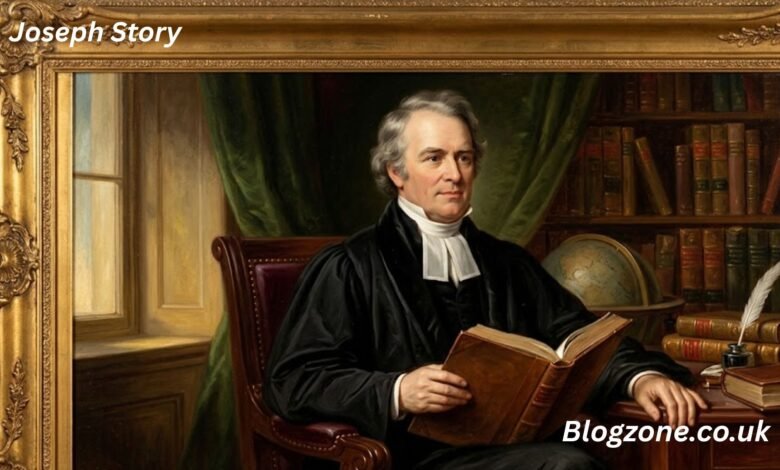
Few legal minds have left as lasting an impression on the American judicial system as Joseph Story. Revered as one of the most brilliant justices ever to serve on the United States Supreme Court, Story played a defining role in shaping constitutional interpretation during the early years of the American republic. His remarkable legal scholarship, influential court opinions, and dedication to strengthening the federal government established principles that continue to influence American law centuries later.
Although many recognize names like John Marshall or Oliver Wendell Holmes Jr., Joseph Story deserves equal recognition for his extraordinary contributions. Beyond his judicial service, he became one of the nation’s most respected legal educators, helping transform legal education into a structured academic discipline. His writings became foundational texts for generations of lawyers, judges, and scholars.
Understanding Joseph Story provides valuable insight into the evolution of American constitutional law, federal authority, commercial regulation, and the judicial philosophy that helped shape the United States into a unified constitutional republic.
Early Life and Education
Joseph Story was born on September 18, 1779, in Marblehead, Massachusetts, during the closing years of the American Revolution. Growing up in a nation still finding its identity, Story developed a deep appreciation for both liberty and the rule of law. His father, a physician who supported American independence, encouraged intellectual curiosity and public service from an early age.
Story demonstrated exceptional academic ability as a young student. He later enrolled at Harvard College, where he graduated in 1798 with distinction. Although legal education during that era relied heavily on apprenticeships rather than formal law schools, Story devoted himself to studying legal principles through extensive reading and mentorship under established attorneys.
His legal training emphasized not only English common law but also the emerging constitutional framework of the United States. This combination of traditional legal knowledge and appreciation for America’s new political system prepared him for an extraordinary career.
By his early twenties, Story had already gained recognition as a talented lawyer whose analytical abilities distinguished him from many of his contemporaries.
Entering Politics and Public Service
Joseph Story quickly became active in Massachusetts politics while simultaneously building a successful legal practice. His intelligence, eloquence, and understanding of constitutional issues attracted widespread attention.
Unlike many political figures of his era, Story often approached public debates through careful legal reasoning rather than partisan ideology. He believed that stable institutions, effective governance, and constitutional fidelity were essential for preserving liberty.
He served in the Massachusetts House of Representatives and later represented his state in the United States Congress. During these years, Story gained firsthand experience with the practical challenges facing the young republic, including disputes over federal authority, interstate commerce, and national unity.
Although his congressional career was relatively brief, it introduced him to influential national leaders and demonstrated his exceptional legal intellect. These experiences ultimately paved the way for his appointment to the nation’s highest court.
Appointment to the United States Supreme Court
At only thirty-two years old, Joseph Story received one of the most remarkable appointments in American judicial history. In 1811, President James Madison nominated him to the United States Supreme Court.
His youth surprised many observers, but his reputation for legal brilliance outweighed concerns about his age. The Senate confirmed his appointment, making him one of the youngest Supreme Court justices ever to serve.
Story joined a Court led by Chief Justice John Marshall, whose vision of a strong federal government profoundly influenced constitutional interpretation. Together, Marshall and Story formed one of the most significant judicial partnerships in American history.
The Court faced enormous constitutional questions during this period. The young nation struggled with issues involving federal power, state sovereignty, economic regulation, property rights, maritime law, and commercial disputes. Story became one of the Court’s most influential voices in resolving these challenges.
Partnership with Chief Justice John Marshall
The relationship between Joseph Story and Chief Justice John Marshall significantly shaped early American constitutional law. Although each justice possessed a distinct intellectual style, both believed the Constitution established a durable national government capable of addressing the country’s needs.
Marshall often authored landmark constitutional opinions establishing federal supremacy. Story consistently supported these principles while contributing his own extensive reasoning and legal scholarship.
Their judicial philosophy emphasized that the Constitution should function as a practical governing document rather than a narrow legal code limited by rigid interpretations. They believed national unity required an effective federal judiciary capable of resolving conflicts among states and ensuring consistent application of federal law.
Story’s carefully reasoned opinions frequently reinforced Marshall’s constitutional vision, helping establish precedents that strengthened the legitimacy and authority of the Supreme Court.
Contributions to Constitutional Law
Joseph Story’s constitutional influence extended far beyond individual cases. He consistently argued that the Constitution should be interpreted according to its broader purposes rather than isolated textual technicalities.
One of his enduring contributions involved protecting the authority of Congress to regulate interstate commerce. Story recognized that economic development required uniform national rules rather than conflicting state regulations.
He also defended federal judicial authority in disputes involving state governments, emphasizing that constitutional interpretation ultimately belonged to the Supreme Court rather than individual states.
Story believed constitutional stability encouraged economic growth, protected individual rights, and promoted national prosperity. His opinions reflected careful historical analysis, logical reasoning, and deep respect for constitutional structure.
Many legal scholars continue studying his writings because they combine practical legal reasoning with sophisticated constitutional theory.
Leadership in Commercial and Maritime Law
Perhaps no area better demonstrates Joseph Story’s expertise than commercial and maritime law. During the nineteenth century, American commerce expanded rapidly through shipping, manufacturing, banking, and interstate trade.
Story recognized that economic growth depended upon predictable legal rules governing contracts, insurance, shipping disputes, partnerships, and financial transactions.
His judicial opinions established consistent legal standards that encouraged business confidence throughout the expanding American economy. Rather than allowing individual states to create conflicting commercial regulations, Story supported legal uniformity whenever constitutional authority permitted.
His decisions influenced admiralty law, international trade, bankruptcy proceedings, and commercial contracts for decades. Even modern legal principles governing business transactions reflect ideas developed in Story’s opinions.
Joseph Story as a Legal Scholar
While serving on the Supreme Court, Joseph Story also became one of America’s greatest legal authors. His ability to explain complex legal concepts in organized, accessible language distinguished him from many contemporary jurists.
Story wrote comprehensive treatises covering constitutional law, equity jurisprudence, conflict of laws, agency, partnership, bailments, promissory notes, and numerous additional legal subjects.
These books became standard references throughout the United States and abroad. Lawyers frequently relied upon Story’s treatises because they synthesized judicial decisions into coherent legal principles.
His scholarship helped establish American legal literature independent from English legal traditions. Rather than merely copying British authorities, Story developed distinctly American legal analysis grounded in the Constitution and federal judicial experience.
Many of his publications remained influential long after his death, demonstrating the extraordinary quality of his legal scholarship.
Transforming Legal Education at Harvard
Joseph Story’s influence extended beyond the courtroom through his work as a professor at Harvard Law School. During the early nineteenth century, formal legal education remained relatively uncommon.
Story believed aspiring lawyers should receive systematic academic instruction alongside practical training. As Dane Professor of Law, he delivered lectures that combined legal doctrine, historical analysis, constitutional interpretation, and practical reasoning.
His classroom attracted students from across the country who sought instruction from one of America’s leading legal minds.
Story emphasized careful reading, logical analysis, ethical responsibility, and deep understanding rather than simple memorization of legal rules. His teaching methods contributed significantly to the professionalization of legal education in the United States.
Harvard Law School’s emergence as one of the world’s leading legal institutions owes much to Story’s educational vision and scholarly leadership.
Landmark Judicial Philosophy
Joseph Story approached judging with remarkable intellectual discipline. He believed judges should carefully analyze constitutional text, historical context, legal precedent, and practical consequences before reaching conclusions.
Unlike purely ideological decision-making, Story emphasized objective legal reasoning rooted in constitutional structure.
His philosophy balanced respect for established precedent with recognition that constitutional principles must remain relevant to changing national circumstances. This approach helped create stability while allowing American law to adapt over time.
Story consistently argued that courts should protect constitutional government rather than promote temporary political interests. His commitment to judicial independence strengthened public confidence in the Supreme Court during a formative period of American history.
Influence Beyond His Lifetime
Joseph Story passed away in 1845 after more than three decades of distinguished judicial service. Yet his influence did not end with his death.
His opinions continued guiding later Supreme Court decisions involving constitutional interpretation, federal authority, commercial regulation, and judicial power.
Legal scholars throughout the nineteenth and twentieth centuries frequently cited Story’s writings when examining constitutional questions. His treatises became essential resources for judges, attorneys, and professors worldwide.
Many legal doctrines first articulated by Story remain embedded within modern American jurisprudence. His careful explanations of constitutional principles continue appearing in law school classrooms and judicial opinions.
Although American society has changed dramatically since the early republic, Story’s emphasis on constitutional stability, federal unity, and principled legal reasoning remains remarkably relevant.
Personal Character and Intellectual Legacy
Beyond his professional accomplishments, Joseph Story earned widespread admiration for his personal integrity, intellectual humility, and dedication to public service.
Colleagues described him as energetic, approachable, generous, and deeply committed to justice. Despite his immense legal reputation, Story remained devoted to education, scholarship, and mentoring younger lawyers throughout his career.
His extraordinary work ethic allowed him to balance judicial responsibilities, teaching, extensive writing, and public service simultaneously. Few legal figures have matched the breadth of his contributions across so many different fields.
Story believed the law existed not merely to resolve disputes but to strengthen civil society, encourage economic development, and preserve constitutional government for future generations.
His life demonstrates how intellectual excellence combined with public service can shape an entire nation’s legal foundations.
Why Joseph Story Still Matters Today
Modern Americans continue benefiting from legal principles that Joseph Story helped establish more than two centuries ago. Questions involving federal authority, constitutional interpretation, interstate commerce, judicial independence, and commercial regulation remain central to American public life.
Story’s writings remind readers that constitutional law requires thoughtful reasoning rather than political expediency. His emphasis on careful legal analysis continues inspiring judges, attorneys, professors, and students seeking to understand the Constitution’s enduring significance.
In an era characterized by rapid political and technological change, Story’s commitment to constitutional stability offers valuable lessons about balancing continuity with progress.
His remarkable career illustrates that great legal institutions depend not only upon written constitutions but also upon principled individuals dedicated to interpreting them wisely.
Conclusion
Joseph Story stands among the greatest legal thinkers in American history. From his early years in Massachusetts to his decades on the United States Supreme Court, he consistently demonstrated extraordinary intelligence, unwavering integrity, and deep commitment to constitutional government.
His judicial opinions strengthened the authority of the federal judiciary, promoted national economic development, and clarified countless constitutional principles that remain relevant today. As a scholar, he produced legal works that educated generations of lawyers. As a professor, he transformed legal education into a respected academic discipline. As a public servant, he helped shape the legal identity of the United States during one of its most important historical periods.
Although history often celebrates more widely recognized political leaders, Joseph Story’s influence reaches just as deeply into the foundations of American democracy. His legacy lives on in courtrooms, law schools, constitutional scholarship, and the enduring principles that continue guiding the American legal system.
Also Read