Why Did the Federalist Party End? The Complete Story Behind Its Rise and Fall
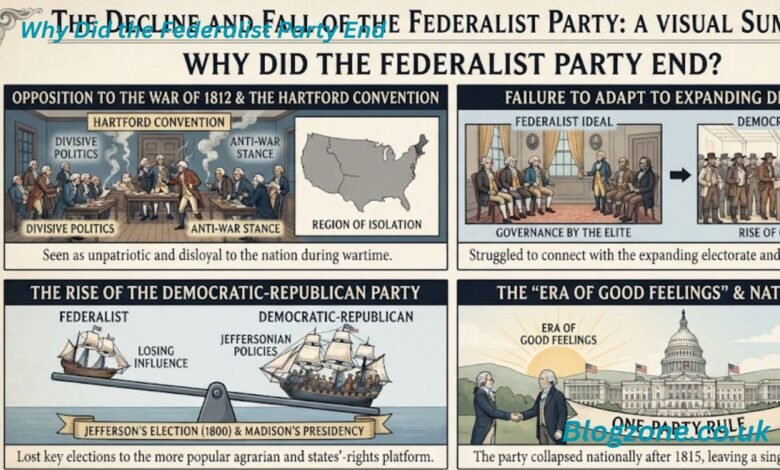
The history of the United States is filled with political movements that have shaped the nation, but few are as significant as the Federalist Party. As America’s first organized political party, it played a crucial role in establishing the country’s early government and institutions. However, despite its powerful beginnings, the party disappeared within just a few decades. Many students, history enthusiasts, and researchers often ask, why did the Federalist Party end? The answer involves a combination of political mistakes, changing public opinion, leadership struggles, regional limitations, and historical events that transformed American democracy. Understanding the decline of the Federalist Party offers valuable insight into how political organizations succeed, fail, and leave lasting legacies.
Although the party eventually vanished, many of its ideas survived through future political movements and continue to influence the American government today. The Federalists helped build a strong national government, established financial systems, strengthened the judiciary, and promoted economic development. Yet the very principles that once made the party successful eventually became obstacles as the country evolved.
The Birth of the Federalist Party
The Federalist Party emerged during the late eighteenth century shortly after the United States gained independence from Great Britain. Following the weakness of the Articles of Confederation, many leaders believed the young nation required a stronger central government capable of maintaining order, regulating trade, collecting taxes, and defending national interests.
Prominent leaders such as Alexander Hamilton, John Adams, and John Jay became the leading voices behind Federalist ideals. They supported the ratification of the United States Constitution and argued that only a strong federal government could prevent political instability. Their vision emphasized national unity, financial responsibility, industrial growth, and closer economic ties with Britain.
The Federalists found strong support among merchants, bankers, manufacturers, wealthy landowners, and citizens living in commercial centers, particularly throughout New England. Their policies encouraged commerce, banking, infrastructure, and federal authority, helping establish many of the governmental structures that remain important today.
The Core Beliefs of the Federalists
To understand why the Federalist Party declined, it is important first to understand what it stood for. Federalists believed that a strong national government was necessary to protect liberty and maintain order. They feared that giving excessive power to individual states could weaken the union and create instability.
The party favored a national banking system, federal assumption of state debts, protective tariffs, and encouragement of manufacturing industries. Federalists also believed that educated and experienced leaders should guide the government rather than relying entirely on direct popular opinion.
Internationally, they generally supported maintaining friendly relations with Great Britain because Britain was America’s largest trading partner. This position later became controversial as tensions between Britain and France intensified.
These beliefs helped shape early American institutions, but they also created significant political opposition.
The Rise of Political Opposition
No political party remains unchallenged forever. While the Federalists were organizing the national government, another group emerged with a very different vision for America’s future.
Thomas Jefferson and James Madison founded the Democratic-Republican Party, arguing that the federal government should remain limited while states retained greater authority. They believed ordinary farmers represented the nation’s true strength and worried that Federalist policies favored wealthy elites over common citizens.
The Democratic-Republicans also supported closer relations with France, especially during the French Revolution, while criticizing Federalist sympathy toward Britain. These ideological differences divided the young nation and created America’s first major two-party political system.
As elections became more competitive, public debates intensified, making it increasingly difficult for the Federalists to maintain widespread support.
The Alien and Sedition Acts Damaged Public Trust
One of the biggest reasons why the Federalist Party lost popularity was the passage of the Alien and Sedition Acts in 1798. These laws were enacted during John Adams’s presidency amid growing tensions with France.
The Alien Acts allowed the federal government to deport foreign nationals considered dangerous, while the Sedition Act made it illegal to publish false or critical statements against the federal government. Federalists argued these measures protected national security during uncertain times.
However, many Americans believed the laws violated freedom of speech and freedom of the press. Newspapers opposing the Federalists faced prosecution, and political critics viewed the legislation as an abuse of government power.
The backlash was severe. Instead of strengthening the Federalists, the laws convinced many voters that the party was becoming authoritarian. Public confidence declined, and the Democratic-Republicans successfully portrayed themselves as defenders of individual liberty.
The Election of 1800 Changed American Politics
The presidential election of 1800 became one of the most important turning points in American political history. Thomas Jefferson defeated incumbent President John Adams, marking the first peaceful transfer of political power between opposing parties in the United States.
Jefferson’s victory demonstrated that voters were ready for change. The Democratic-Republicans gained control of the presidency and Congress, while the Federalists lost much of their national influence.
Although the Federalists continued to participate in politics, they never fully recovered from this defeat. Their inability to expand their appeal beyond their traditional supporters weakened the party’s long-term prospects.
The election also showed that American democracy could survive intense political competition without violence, establishing an important precedent for future generations.
Regional Support Limited Party Growth
Another major factor explaining why the Federalist Party ended was its narrow geographic base. Most Federalist support came from New England states and a few major cities along the Atlantic coast.
Meanwhile, the United States was expanding rapidly westward. New settlers, farmers, and frontier communities generally favored Jeffersonian policies emphasizing agriculture, land ownership, and limited government.
As new states entered the Union, they overwhelmingly supported the Democratic-Republicans. The Federalists failed to build strong organizations in these growing regions, allowing their political influence to shrink steadily over time.
Without broad national support, winning presidential elections and maintaining congressional majorities became increasingly difficult.
Leadership Problems After Alexander Hamilton
Strong leadership often determines whether a political party thrives or declines. Alexander Hamilton served as the Federalists’ intellectual leader, developing economic policies that strengthened the nation’s financial system.
However, Hamilton’s influence declined after conflicts within the party, especially with President John Adams. Personal rivalries weakened party unity, making it harder to present a consistent message to voters.
Hamilton’s death in 1804 following his famous duel with Aaron Burr deprived the Federalists of one of their most brilliant strategists. Without his leadership, the party struggled to inspire new supporters or develop fresh political ideas capable of competing with the growing Democratic-Republican movement.
Leadership divisions further accelerated the party’s decline.
Opposition to the War of 1812
Perhaps the single event that permanently damaged the Federalist Party was the War of 1812 between the United States and Great Britain.
Many Federalists strongly opposed the war because New England merchants relied heavily on trade with Britain. They argued that war would destroy commerce and harm the American economy.
Unfortunately for the party, many citizens interpreted this opposition as lacking patriotism during a national crisis. While some Federalist concerns proved economically valid, public opinion increasingly favored supporting the nation’s military efforts.
The party’s anti-war stance created lasting political damage that became nearly impossible to overcome.
The Hartford Convention Controversy
The Hartford Convention of 1814 became the defining moment in the collapse of the Federalist Party. Delegates from several New England states met to discuss grievances regarding the war and federal policies.
Although some delegates proposed constitutional amendments, rumors spread that Federalists were considering secession from the United States. Even though no official plan for secession was adopted, the public perception proved devastating.
At nearly the same time, news arrived that the United States had signed the Treaty of Ghent, ending the war, followed shortly by Andrew Jackson’s victory at the Battle of New Orleans.
National celebrations overshadowed the Hartford Convention, making the Federalists appear disloyal and out of touch with patriotic sentiment. Their reputation suffered irreparable damage.
The Era of Good Feelings
Following the War of 1812, the Democratic-Republican Party dominated American politics during a period known as the Era of Good Feelings.
Without a strong national opposition, political conflict temporarily decreased. Federalist candidates struggled to gain support, and many former members either retired from politics or joined other political movements.
By the 1820s, the Federalist Party had effectively disappeared as a national political organization.
Although the party no longer existed, many Federalist principles continued influencing American government through later political leaders and institutions.
Lasting Contributions of the Federalist Party
Even though the Federalist Party ended, its achievements remain deeply embedded within the American political system.
The party helped establish a stable federal government under the Constitution. Alexander Hamilton’s financial programs created the foundation for the nation’s banking and credit systems. Federalists supported a professional judiciary, resulting in the appointment of influential judges whose decisions shaped constitutional law for generations.
Their emphasis on commerce, manufacturing, and infrastructure encouraged long-term economic growth that supported America’s emergence as a major world power.
Many constitutional interpretations promoted by Federalist leaders continue influencing legal debates today.
Why Historians Still Study the Federalists
Modern historians continue examining the Federalist Party because its successes and failures provide important lessons about democracy, leadership, political messaging, and constitutional government.
The Federalists demonstrated the importance of strong institutions during a nation’s formative years. At the same time, their decline illustrates how political parties must adapt to changing demographics, public opinion, and national priorities.
Their story also highlights the risks of appearing disconnected from ordinary citizens or becoming too closely associated with narrow regional interests.
Although the party disappeared, its influence survives in many aspects of modern American governance.
The Legacy of America’s First Political Party
The Federalist Party may have vanished from elections, but it left behind ideas that continue shaping the United States. Its leaders believed that a stable government, responsible financial management, and an independent judiciary were essential for preserving liberty and national prosperity.
Future political parties adopted many of these principles, even while rejecting others. As American democracy evolved, the Federalists became an important chapter in the nation’s political development rather than a permanent political force.
Understanding their rise and fall provides valuable perspective on how democracies change over time and how political success depends on adapting to new challenges while maintaining public trust.
Conclusion
The question why did the Federalist Party end has multiple answers rather than a single cause. The party declined because of unpopular legislation such as the Alien and Sedition Acts, defeat in the Election of 1800, limited regional support, internal leadership conflicts, opposition to the War of 1812, and the damaging reputation created by the Hartford Convention. Together, these factors gradually reduced public confidence and political influence until the party disappeared from national politics.
Despite its downfall, the Federalist Party made lasting contributions that continue influencing the United States today. Its commitment to constitutional government, financial stability, and strong national institutions helped shape the foundation of the American republic. While the party itself no longer exists, its legacy remains an enduring part of American history, reminding us that political organizations may fade, but their ideas can continue shaping nations for centuries.