Seymour G. Epstein: The Psychologist Who Changed How We Understand Human Thinking
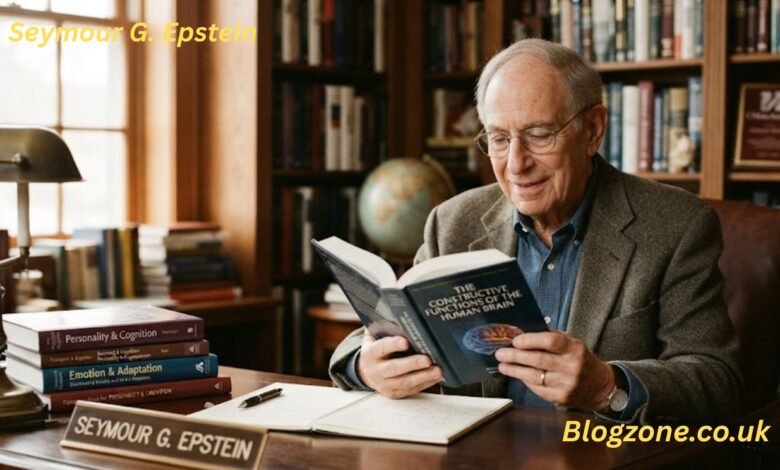
Seymour G. Epstein is widely recognized as one of the most influential psychologists of the modern era. His groundbreaking work transformed how researchers and students understand the relationship between rational thought and intuitive thinking. Throughout a distinguished academic career spanning several decades, Epstein introduced innovative theories that challenged traditional assumptions about human behavior. His research demonstrated that people do not rely solely on logical reasoning when making decisions. Instead, they continuously balance analytical thinking with emotional, intuitive responses shaped by experience.
The influence of Seymour G. Epstein extends well beyond university classrooms. His ideas have inspired psychologists, educators, business professionals, therapists, and researchers seeking a deeper understanding of human judgment and personality. By developing comprehensive theories supported by years of scientific research, he helped bridge the gap between cognitive psychology and personality psychology. Today, his work continues to appear in psychology textbooks, academic journals, and university courses around the world. His contributions remain relevant because they explain everyday behaviors, from simple personal choices to complex life decisions, in a way that combines scientific evidence with practical understanding.
Early Life and Educational Journey
Although Seymour G. Epstein became internationally known for his achievements in psychology, his journey began with a deep curiosity about human nature and individual differences. From an early stage in his academic career, he displayed a strong interest in understanding why people behave differently even when facing similar situations. This curiosity eventually guided him toward psychological research, where he sought evidence-based explanations instead of relying on assumptions or philosophical ideas alone.
His educational experiences provided a strong foundation for future discoveries. By studying personality, cognition, learning, and emotional behavior, Epstein gradually developed an integrated perspective that combined multiple branches of psychology. Rather than viewing personality as a fixed collection of traits, he believed that human behavior emerged through ongoing interactions between thinking, emotion, and experience. This broad educational background enabled him to question existing theories and propose innovative alternatives supported by empirical research.
As he advanced through graduate studies and academic appointments, Seymour G. Epstein became increasingly interested in how unconscious experiences influence conscious decision-making. These interests eventually formed the basis of his most influential psychological theories.
Building an Influential Academic Career
Seymour G. Epstein established himself as an accomplished researcher through decades of teaching, publishing, and scientific investigation. His academic career was marked by consistent contributions to personality psychology, cognitive psychology, and behavioral science. Rather than focusing on isolated experiments, he pursued long-term research programs that explored how people process information and respond to everyday challenges.
Throughout his career, Epstein emphasized the importance of studying individuals in realistic settings instead of relying exclusively on artificial laboratory situations. He believed that understanding real-life behavior required examining emotions, beliefs, habits, and personal experiences together. This practical perspective distinguished his work from many traditional psychological approaches that concentrated primarily on abstract reasoning.
Students and fellow researchers admired his ability to explain complicated psychological concepts using clear theoretical models supported by measurable evidence. His publications demonstrated remarkable consistency, combining theoretical sophistication with practical applications that could be tested scientifically.
The Development of Cognitive-Experiential Self-Theory
Perhaps Seymour G. Epstein’s greatest contribution to psychology is the development of Cognitive-Experiential Self-Theory, commonly known as CEST. This influential theory proposes that people operate through two interconnected systems of information processing.
The first system is analytical, deliberate, logical, and conscious. It allows individuals to evaluate evidence, solve mathematical problems, and make reasoned judgments after careful consideration. This rational system resembles the traditional understanding of human intelligence and critical thinking.
The second system operates quite differently. It is experiential, intuitive, emotional, automatic, and heavily influenced by accumulated life experiences. Rather than carefully analyzing every situation, this system enables rapid judgments based on feelings, habits, and previously learned patterns. According to Epstein, this intuitive system evolved because it allows humans to respond quickly in everyday situations where immediate action may be necessary.
Importantly, Epstein argued that these two systems are not opponents. Instead, they work together continuously. Every decision people make involves some combination of rational analysis and experiential intuition. Understanding this interaction became one of the defining achievements of modern personality psychology.
Understanding Rational and Experiential Thinking
One of the reasons Seymour G. Epstein’s research remains influential is that it explains why intelligent individuals sometimes make emotional decisions. Traditional psychological theories often assumed that rational thinking should dominate behavior whenever possible. Epstein demonstrated that reality is much more complex.
People may logically understand that a particular situation is safe while still experiencing fear because their experiential system has learned emotional associations from previous experiences. Similarly, someone may recognize statistically favorable opportunities but hesitate because intuitive feelings create uncertainty.
This dual-processing framework helps explain countless everyday situations. Consumers often purchase products because they feel trustworthy rather than because they have objectively compared every available option. Investors occasionally ignore logical financial advice due to emotional reactions. Individuals may choose careers, friendships, or relationships based partly on intuition even after conducting careful analysis.
Epstein’s theory does not suggest that intuition is inherently flawed. Instead, it emphasizes that both rational and experiential thinking possess strengths and limitations depending on the situation.
Contributions to Personality Psychology
Seymour G. Epstein significantly influenced personality psychology by proposing that personality reflects dynamic cognitive and emotional systems rather than fixed characteristics alone. He argued that individuals develop personal belief systems through repeated experiences, gradually shaping expectations about themselves and the world around them.
These personal belief systems influence how people interpret new information. For example, someone who repeatedly experiences success may develop optimistic expectations that encourage confidence in future challenges. Conversely, repeated negative experiences may create pessimistic expectations that affect motivation and decision-making.
Epstein believed these cognitive structures remain relatively stable while still allowing change through meaningful experiences. This balanced perspective helped integrate personality development with cognitive learning, offering researchers a richer understanding of individual differences.
His work encouraged psychologists to study personality as an adaptive process instead of merely measuring isolated personality traits.
Research on Human Decision-Making
Decision-making became one of the central applications of Seymour G. Epstein’s theories. He demonstrated that people rarely rely on pure logic when making important choices. Instead, emotional experiences, intuitive impressions, personal beliefs, and rational analysis all contribute simultaneously.
This understanding has influenced numerous professional fields beyond psychology. Business leaders use similar concepts when studying consumer behavior. Medical professionals recognize that patients often make healthcare decisions based on emotional comfort rather than statistical evidence alone. Educational researchers examine how intuitive beliefs affect student learning and motivation.
Epstein’s research helped explain why providing factual information does not always change behavior. Since experiential beliefs develop through lived experiences rather than abstract facts, meaningful behavioral change often requires emotional engagement alongside logical explanation.
Influence on Clinical Psychology
Clinical psychologists have benefited greatly from Seymour G. Epstein’s theoretical contributions. Many therapeutic approaches recognize that emotional beliefs developed over many years cannot always be changed through rational discussion alone.
Clients frequently understand intellectually that their fears are unrealistic while continuing to experience intense anxiety. Epstein’s dual-processing framework helps explain this apparent contradiction. Rational knowledge exists alongside deeply rooted experiential learning.
Therapists often work to modify these experiential beliefs through repeated emotional experiences, behavioral practice, and supportive relationships. In this way, Epstein’s research provides valuable insights into why psychological treatment involves more than simply teaching logical thinking.
His ideas continue influencing therapeutic methods focused on emotional learning, resilience, and long-term behavioral change.
Publications and Academic Legacy
Over the course of his career, Seymour G. Epstein authored numerous scholarly articles, research papers, and influential books exploring personality, cognition, emotional processing, and behavioral science. His publications have been cited extensively within academic literature, reflecting the enduring importance of his work.
Researchers continue building upon his theories by examining how intuitive and rational systems interact across different cultures, professions, and life situations. Advances in neuroscience have also provided biological evidence supporting many aspects of dual-process thinking, reinforcing the significance of Epstein’s earlier theoretical contributions.
Universities continue teaching his work because it provides students with an integrated understanding of personality, cognition, emotion, and behavior. His publications remain valuable resources for graduate students, researchers, and practicing psychologists.
Why Seymour G. Epstein’s Work Still Matters Today
Modern society presents increasingly complex decisions involving technology, healthcare, finance, education, and personal relationships. Seymour G. Epstein’s theories remain highly relevant because they explain how individuals navigate these challenges using both rational analysis and intuitive judgment.
The rise of behavioral economics, decision science, artificial intelligence, and cognitive neuroscience has further highlighted the importance of understanding dual-process thinking. Many contemporary researchers continue exploring ideas remarkably similar to those introduced decades earlier by Epstein.
Organizations also recognize that effective leadership requires more than analytical ability. Emotional intelligence, intuition, and experiential learning all contribute to successful decision-making. These concepts align closely with Epstein’s foundational research.
As psychological science continues evolving, his work provides an enduring framework for integrating emotion, experience, personality, and rational thought into a comprehensive understanding of human behavior.
Lasting Influence on Psychology
Few psychologists have contributed such a balanced perspective on human thinking as Seymour G. Epstein. By demonstrating that people possess both rational and experiential systems, he transformed psychological research and expanded our understanding of personality and decision-making. His theories continue shaping research across cognitive psychology, clinical psychology, educational psychology, organizational behavior, and behavioral economics.
Rather than portraying humans as purely logical or purely emotional, Epstein showed that everyday behavior emerges through continuous interaction between these two powerful systems. This insight remains one of the most important advances in modern psychological theory.
His legacy extends beyond scientific publications. Teachers introduce his concepts to new generations of psychology students, therapists apply his principles in clinical practice, and researchers continue testing and expanding his theories. The lasting relevance of his work reflects its ability to explain real human experiences with both scientific rigor and practical clarity.
Conclusion
Seymour G. Epstein occupies a respected place in the history of modern psychology because of his pioneering research into personality, cognition, and decision-making. His Cognitive-Experiential Self-Theory offered an innovative explanation for how rational thought and intuitive experience work together to shape behavior. Through decades of research, teaching, and scholarly writing, he provided psychologists with a richer understanding of human nature that remains influential today.
As new discoveries continue to emerge in psychology and neuroscience, the ideas introduced by Seymour G. Epstein remain remarkably relevant. His work reminds us that understanding human behavior requires recognizing the powerful partnership between logic and experience. This balanced perspective ensures that his contributions will continue inspiring researchers, educators, clinicians, and students for many years to come.
Also Read