John Marshall Harlan: The Supreme Court Justice Who Stood for Equality and Constitutional Principles
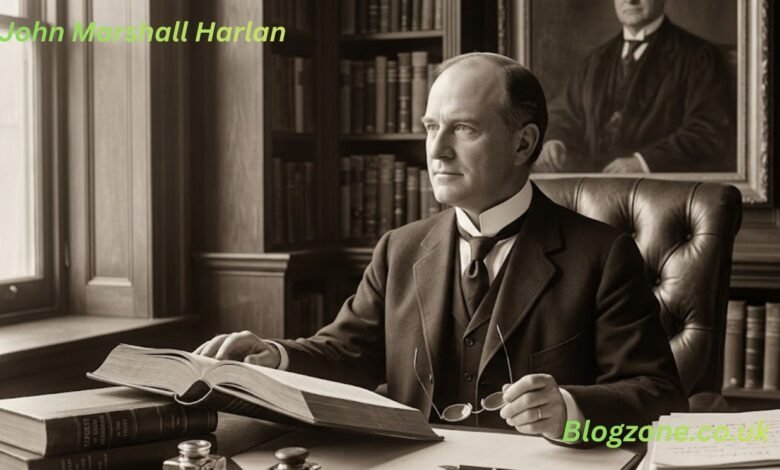
John Marshall Harlan remains one of the most respected figures in the history of the United States Supreme Court. Although he often found himself in the minority during his years on the bench, his unwavering commitment to constitutional principles eventually earned him recognition as one of America’s greatest justices. His opinions, once considered controversial, later became the foundation for many landmark civil rights decisions. Harlan believed that the Constitution should protect the rights of every citizen equally, regardless of race, social status, or political popularity. His judicial legacy continues to influence courts, legal scholars, and constitutional debates more than a century after his service ended.
Known as the “Great Dissenter,” John Marshall Harlan demonstrated extraordinary courage by refusing to compromise his interpretation of the Constitution even when most of his fellow justices disagreed. His famous dissents have become celebrated examples of judicial independence and constitutional integrity. Today, historians and legal experts recognize that many of Harlan’s once-lonely opinions accurately anticipated the future direction of American constitutional law.
Early Life and Family Background
John Marshall Harlan was born on June 1, 1833, in Boyle County, Kentucky, into a prominent and politically influential family. His father, James Harlan, served as a congressman and held several important public offices, creating an environment where discussions about law, government, and public service were common. Growing up in Kentucky during a period of national tension over slavery and states’ rights profoundly shaped Harlan’s understanding of American politics and constitutional issues.
Although Kentucky was a border state with divided loyalties, Harlan developed a strong appreciation for the importance of preserving the Union. His upbringing exposed him to the complexities of race, citizenship, and constitutional governance that would later define many of his judicial opinions. His family’s emphasis on education and civic responsibility encouraged him to pursue a legal career that combined intellectual discipline with public service.
Education and Legal Training
Harlan attended Centre College in Danville, Kentucky, where he received a broad liberal education before studying law under experienced attorneys. During the nineteenth century, aspiring lawyers commonly learned through apprenticeships rather than formal law schools, allowing Harlan to gain practical courtroom experience from the beginning of his legal career.
After completing his legal studies, he was admitted to the Kentucky bar and quickly established himself as a capable attorney. His analytical thinking, persuasive arguments, and dedication to constitutional issues earned him respect within the legal community. These early professional experiences prepared him for increasingly significant public responsibilities that eventually led to the nation’s highest court.
Political Career Before the Supreme Court
Before becoming a justice, Harlan enjoyed an active political career. He initially affiliated with the Whig Party before joining the Constitutional Union Party and eventually becoming a Republican during the Civil War era. His political evolution reflected the dramatic changes occurring throughout the United States as debates over slavery, reconstruction, and national unity transformed American politics.
During the Civil War, Harlan remained loyal to the Union despite coming from a slaveholding border state. His support for preserving the nation demonstrated his belief that constitutional government required national unity above sectional interests. Following the war, he continued participating in Kentucky politics while building a distinguished legal reputation.
Although he unsuccessfully sought elected office on several occasions, Harlan’s integrity and legal expertise attracted the attention of national political leaders. His reputation eventually led to consideration for a position on the Supreme Court.
Appointment to the Supreme Court
In 1877, President Rutherford B. Hayes nominated John Marshall Harlan to serve as an Associate Justice of the United States Supreme Court. The Senate confirmed his appointment, beginning a judicial career that would last more than three decades. At the time of his nomination, few observers anticipated that Harlan would become one of the Court’s most influential and respected members.
The Supreme Court during Harlan’s era confronted enormous constitutional questions arising from Reconstruction, industrialization, expanding federal authority, and civil rights. These issues demanded careful interpretation of constitutional principles amid rapidly changing social and economic conditions. Harlan approached every case with careful scholarship and a deep respect for the Constitution’s enduring values.
Judicial Philosophy and Constitutional Vision
One of the defining characteristics of John Marshall Harlan’s judicial philosophy was his belief that the Constitution established enduring principles capable of protecting individual liberty while maintaining effective government. He rejected interpretations that weakened constitutional guarantees simply because political majorities preferred different outcomes.
Harlan viewed the Constitution as a living framework whose fundamental commitments to equality, due process, and justice remained constant even as society evolved. He believed judges had a responsibility to enforce constitutional protections regardless of political pressure or public opinion.
Unlike some contemporaries who emphasized narrow readings of constitutional amendments, Harlan interpreted the Reconstruction Amendments as powerful guarantees of equal citizenship for all Americans. This perspective placed him ahead of many judges of his generation and ultimately influenced future constitutional developments.
The Famous Dissent in Plessy v. Ferguson
The most celebrated moment of Harlan’s judicial career came in 1896 when the Supreme Court decided Plessy v. Ferguson. The majority upheld racial segregation under the doctrine of “separate but equal,” allowing states to maintain segregated public facilities.
John Marshall Harlan stood alone in dissent.
His opinion argued that the Constitution is “color-blind” and neither recognizes nor tolerates legal distinctions based on race. Harlan insisted that government-sponsored segregation violated the Equal Protection Clause of the Fourteenth Amendment and undermined the principles upon which the nation was founded.
At the time, his dissent attracted relatively little support. However, decades later, his reasoning became the intellectual foundation for the Supreme Court’s decision in Brown v. Board of Education, which declared school segregation unconstitutional. Harlan’s willingness to defend constitutional equality despite overwhelming opposition transformed his dissent into one of the most influential judicial opinions in American history.
Champion of Civil Rights
Although Harlan’s views reflected certain limitations common to his era, his judicial record consistently demonstrated a stronger commitment to civil rights than that of most contemporaries. He believed African Americans deserved full constitutional protection and equal treatment under the law.
His opinions emphasized that constitutional guarantees should not depend upon race, political influence, or economic status. He opposed laws that created artificial distinctions among citizens and argued that equal justice formed the foundation of democratic government.
Harlan recognized that constitutional amendments adopted after the Civil War fundamentally changed the relationship between citizens and government. He believed courts had an obligation to enforce these protections vigorously rather than allowing state governments to undermine them through discriminatory legislation.
Views on Federal Authority
John Marshall Harlan generally supported a balanced interpretation of federal power. He believed the national government possessed sufficient constitutional authority to protect civil rights and preserve national unity while respecting legitimate state interests.
His opinions frequently addressed disputes involving interstate commerce, federal regulation, and constitutional limits on governmental authority. Rather than adopting rigid ideological positions, Harlan evaluated each case according to constitutional text, historical understanding, and practical consequences.
This balanced approach enabled him to contribute meaningfully to numerous areas of constitutional law beyond civil rights, including commerce, taxation, labor regulation, and federal jurisdiction.
Influence on Constitutional Interpretation
Harlan’s influence extends far beyond the cases he decided during his lifetime. Legal scholars regularly cite his opinions as examples of principled constitutional interpretation grounded in enduring values rather than temporary political preferences.
Many constitutional doctrines accepted today closely resemble positions Harlan defended while serving in the minority. His understanding of equal protection, due process, and judicial responsibility anticipated major developments throughout the twentieth century.
Judges frequently reference Harlan’s opinions because they combine historical analysis, logical reasoning, and moral clarity. His writings continue to appear in law school textbooks, judicial opinions, and scholarly research examining constitutional development.
The Great Dissenter
The title “Great Dissenter” reflects more than Harlan’s willingness to disagree with his colleagues. It recognizes his remarkable ability to articulate constitutional principles that later generations embraced despite initial rejection.
Dissenting opinions occupy a unique place within judicial history. Although they lack immediate legal authority, they preserve alternative constitutional interpretations that may guide future courts. Harlan understood this responsibility and wrote his dissents with extraordinary care, believing that constitutional truth should never depend solely upon majority votes.
His dissents demonstrated intellectual independence rather than personal disagreement. He respected his colleagues while firmly defending principles he believed essential to constitutional government.
Personal Character and Professional Reputation
Colleagues and lawyers who appeared before the Supreme Court admired Harlan for his honesty, diligence, and commitment to justice. He earned a reputation as an exceptionally hardworking justice who thoroughly prepared every case before participating in oral arguments and judicial conferences.
Despite his strong convictions, Harlan maintained respectful relationships with fellow justices who frequently disagreed with his conclusions. His professionalism contributed to the Court’s institutional integrity while reinforcing public confidence in the judicial process.
Outside the courtroom, Harlan valued family life, education, and public service. His personal discipline reflected the same commitment to responsibility that characterized his judicial career.
Lasting Legacy in American Law
The legacy of John Marshall Harlan has grown steadily since his death in 1911. During his lifetime, many observers viewed him as an eloquent but isolated dissenter. Today, historians often rank him among the greatest Supreme Court justices because later constitutional developments repeatedly validated his reasoning.
His influence became particularly evident during the civil rights movement of the twentieth century. Landmark decisions protecting equal educational opportunities, voting rights, and constitutional equality frequently echoed principles Harlan articulated decades earlier.
Modern constitutional law continues benefiting from Harlan’s insistence that judges faithfully enforce constitutional guarantees even when doing so proves politically unpopular. His example reminds courts that constitutional principles sometimes require courage as well as legal expertise.
Impact on Legal Education
Law schools across the United States devote significant attention to Harlan’s opinions because they illustrate fundamental principles of constitutional interpretation. Students studying constitutional law encounter his dissents as examples of persuasive legal reasoning capable of influencing future generations.
His opinions encourage aspiring lawyers to examine constitutional questions carefully rather than merely following existing precedent. Professors often emphasize Harlan’s work when discussing judicial independence, constitutional equality, and the evolving nature of legal interpretation.
By studying Harlan’s career, future attorneys gain a deeper appreciation for the judiciary’s role in protecting constitutional rights and preserving democratic institutions.
Historical Significance
John Marshall Harlan occupies a unique position in American legal history because he bridged the constitutional challenges of Reconstruction and the modern civil rights era. His judicial service occurred during a period of profound national transformation involving industrial growth, political conflict, and evolving understandings of citizenship.
Although many contemporaries accepted racial segregation and limited federal protection for civil rights, Harlan consistently defended broader constitutional guarantees. His willingness to challenge prevailing assumptions demonstrated remarkable judicial courage and intellectual integrity.
Historical scholarship increasingly recognizes that Harlan’s constitutional vision helped shape the legal foundations supporting later advances in equality and individual liberty. His work illustrates how principled judicial reasoning can influence constitutional development long after specific cases have been decided.
Conclusion
John Marshall Harlan remains one of the most admired figures in American judicial history because he consistently placed constitutional principles above political convenience. His commitment to equality, justice, and faithful constitutional interpretation established a legacy that continues to inspire judges, lawyers, scholars, and citizens alike.
His famous dissents remind us that legal progress often begins with individuals willing to defend fundamental principles despite overwhelming opposition. The constitutional ideals Harlan championed eventually became central features of American law, confirming the enduring value of independent judicial reasoning.
More than a century after his service on the Supreme Court ended, John Marshall Harlan’s influence continues to shape constitutional debates and judicial decisions. His life demonstrates that true greatness in public service is measured not by immediate popularity but by lasting commitment to justice, equality, and the enduring promise of the Constitution.
Also read